
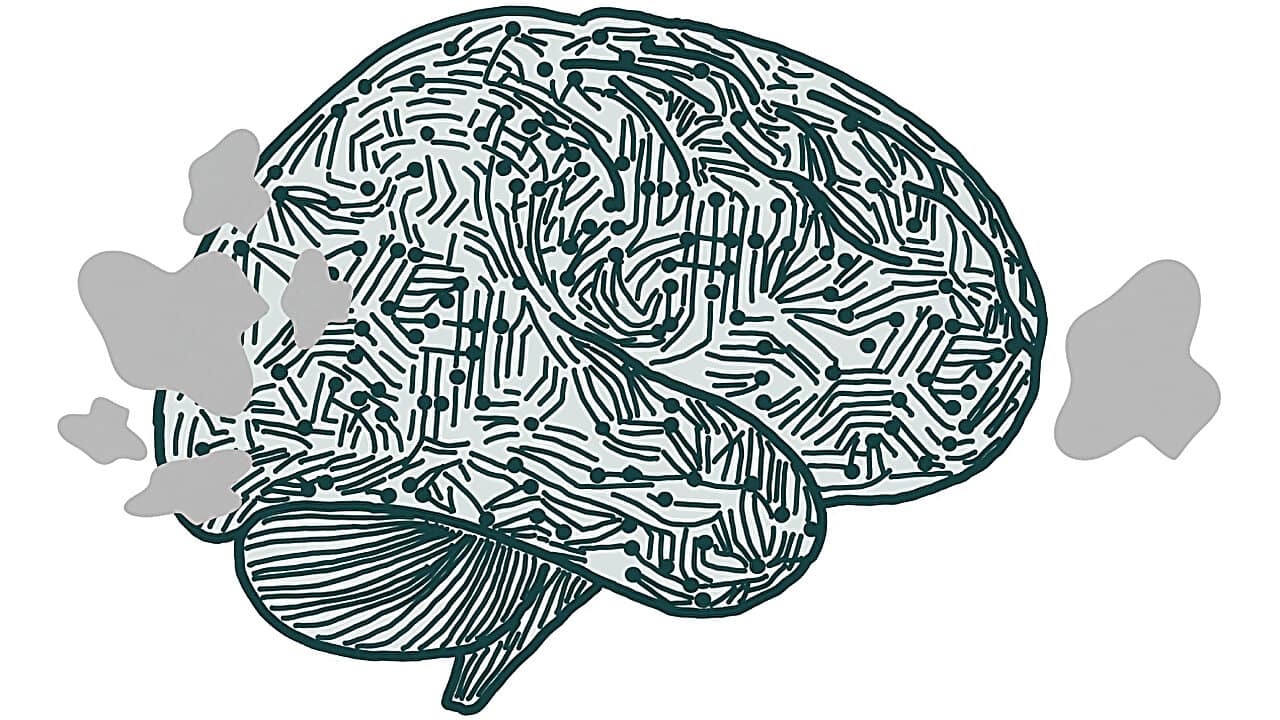
There is a quiet war happening upstream of every opinion you hold. It is not fought with arguments. By the time arguments show up, the outcome is already mostly decided. The real battle happens earlier, at the level of perception. What you see, how fast you see it, and what never reaches you at all.
Three forces shape that battlefield: speed, accuracy, and filtering. They do not just influence what people think. They determine what people are capable of thinking in the first place. Understanding how these forces operate is not a matter of political preference or ideology. It is a basic requirement for functioning as an informed person in the modern information environment.
Speed: The Tyranny of Now
Information used to arrive slowly enough to be digested. Now it arrives faster than it can be understood.
Speed creates a specific and measurable distortion. It rewards immediacy over reflection. When something happens, a political event, a health scare, a viral clip, there is a race to define it first. Not to understand it. To frame it. The first narrative that lands tends to stick, even when it is incomplete or factually wrong. Psychologists call this anchoring. The mechanism is straightforward.
The first explanation becomes the working default. Corrections that arrive later feel like revisions, not revelations. Most people never fully update their original view because attention has already moved on. The story is considered finished. The impression stays behind.
Speed also compresses the space available for decision-making. Platforms are built to encourage immediate reaction. Share, comment, take a side. There is no structural pause built into the system for uncertainty or reflection. Without that pause, nuance does not survive the process.
A fast information system does not just deliver content quickly. It forces human cognition into shortcuts. Pattern recognition replaces analysis. Emotional response replaces evaluation. The brain under time pressure will reach for the nearest plausible explanation and hold it, often permanently.
This is not a flaw in human thinking. It is a predictable response to an engineered environment. The relevant question is whether that environment was designed with your understanding in mind, or with something else.
Accuracy: The Illusion of Precision
More data does not automatically produce more truth. In practice, accuracy is frequently subordinate to coherence.
A narrative does not need to be precisely accurate to be persuasive. It needs to be internally consistent and emotionally satisfying. Overly complex or technically precise explanations consistently lose to simpler, cleaner ones, even when the complex explanation is correct and the simple one is not.
Most people do not evaluate information based on its objective accuracy. They evaluate it through three filters. Does it make sense quickly? Does it align with existing beliefs? Does it feel credible coming from this particular source? Accuracy, in practical terms, is processed through trust and familiarity before evidence enters the picture.
This creates a specific vulnerability. Confidently delivered, slightly wrong information regularly outcompetes cautiously presented truth. Certainty reads as competence. Hedging reads as weakness, even when hedging is the scientifically honest position.
The problem compounds when institutions or experts are caught being wrong, even once, even on a secondary point. Future accuracy gets discounted across the board. Trust, once fractured, does not recover along a straight line. It requires consistent performance over time to rebuild, and even then it never fully returns to its original level.
Accuracy alone is not sufficient. It has to survive contact with human psychology, institutional credibility, and the framing conditions already set by speed. An accurate piece of information arriving late into a fully anchored narrative faces a structural disadvantage that its correctness cannot overcome on its own.
Filtering: The Invisible Hand
If speed determines what arrives first and accuracy determines what could be true, filtering determines what you ever see at all. It is the least visible of the three forces and consistently the most powerful.
Every platform, institution, and information pipeline filters. What gets amplified. What gets buried. What gets labeled as misinformation, fringe content, or simply irrelevant. What disappears without label or explanation.
This is not always the product of deliberate manipulation. Much of it is optimization for engagement, retention, and relevance. Platform algorithms are built to surface content that keeps attention active. That function, applied at scale, produces a curated version of reality whether or not anyone intended it to.
The result is that most people are not seeing the world. They are seeing a version of it that has passed through multiple layers of selection before it reached them.
Filtering does more than remove information. It actively shapes context. It determines which questions are treated as legitimate, which perspectives are classified as fringe, and which topics feel urgent versus marginal. Over time, those determinations build a perceptual frame that most people inside it cannot see, because it constitutes the boundaries of what feels normal and what feels extreme.
When two people have been exposed to significantly different filtered environments over an extended period, productive debate becomes structurally difficult. They are not disagreeing over conclusions. They are operating from different constructed realities with different standards for what counts as evidence. Closing that gap requires more than a good argument. It requires addressing the filtering infrastructure that produced the gap in the first place.
The Interaction Effect
Individually, speed, accuracy, and filtering are each influential. Together, they produce something qualitatively different.
The typical cycle operates as follows. A fast narrative emerges. It is simplified for clarity and emotional impact, trading precision for coherence. It is then amplified selectively while competing frames are suppressed or labeled. By the time analysis catches up, public understanding is not a neutral reflection of events. It is a constructed outcome that few people inside the process recognize as constructed.
This cycle does not require a coordinated conspiracy to function. It only requires that the incentive structures of platforms, media organizations, and political actors point in compatible directions. When speed rewards early framing, when emotional coherence outcompetes careful accuracy, and when filtering amplifies what performs best under those conditions, the result is systematic distortion that operates largely without anyone deliberately orchestrating it.
The people inside that cycle do not experience it as distortion. They feel informed.
The Cost of Outsourcing Perception
Modern information infrastructure encourages a quiet habit. Outsourcing perception.
Feeds, summaries, curated newsletters, and trusted aggregators handle the interpretive work. They tell you what happened, why it matters, and what to think about it. This is efficient. It is also the mechanism through which other people’s filters, priorities, and blind spots become your own.
This does not require bad intent from anyone in the chain. It only requires asymmetry. A small number of actors shaping what a large number of people see. Once that asymmetry is in place, influence follows as a structural outcome. No individual decision, no coordinated campaign, no explicit agenda required.
The more perception is outsourced, the more dependent the individual becomes on the quality and integrity of the sources doing the filtering. That dependency is rarely examined and almost never disclosed.
Reclaiming Clarity
These forces cannot be eliminated. But awareness of them changes how a person engages with information, and that matters.
Slowing down deliberately is the first practical shift. When something feels urgent, that urgency is often a feature of the delivery system, not a property of the information itself. Urgency is part of how persuasion operates. Pausing before reacting disrupts the intended sequence.
Separating confidence from correctness is the second shift. The most certain voice in a room is not automatically the most accurate one. Confidence is a presentational quality. It is not evidence.
Seeking primary sources reduces dependence on filtered intermediaries. Long-form material, original documents, and opposing viewpoints widen the perceptual frame without requiring agreement with any of them.
Paying attention to absence is as important as paying attention to presence. What is not being discussed, and why, is often more informative than what is.
Holding beliefs provisionally is not weakness. It is an accurate acknowledgment that any given person’s information environment is incomplete. Updating when new evidence arrives is not inconsistency. It is the correct response.
Influence does not begin when someone tells you what to think. It begins when someone shapes what you are allowed to see, how fast you see it, and how it is framed when it arrives.
The most important decisions a person makes are not based on the information they have. They are based on the information they were given, and the conditions under which it was delivered.
That distinction is where the real problem lives.
© 2026 – MK3 Law Group
For republication or citation, please credit this article with link attribution to MarginOfTheLaw.com.
What do you think?