
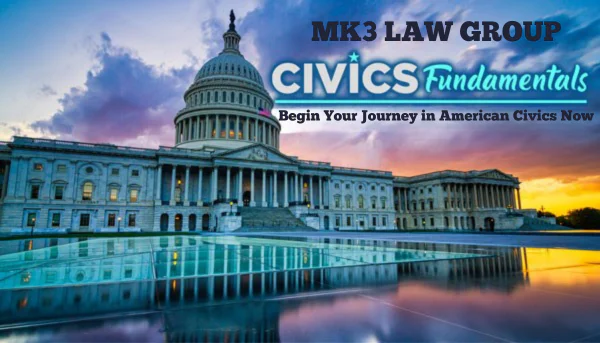
Understanding Government and Citizenship as the First Step Toward Informed Participation
Democracy functions best when citizens understand the institutions that govern them and the principles that guide those institutions. Knowledge of American civics provides individuals with the tools necessary to interpret political events, evaluate public policy, and participate responsibly in civic life.
Civic education is therefore more than an academic subject. It is the foundation of meaningful democratic participation. When citizens understand how government operates and what rights and responsibilities accompany citizenship, they gain the ability to engage with the political system in thoughtful and constructive ways.
For many people, however, the mechanics of government can seem distant or complex. Constitutional law, legislative procedures, and public policy debates often appear to exist in a separate world reserved for legal experts and political professionals. In reality, the American system of government was designed to function with the active involvement of ordinary citizens.
Learning the fundamentals of civics allows individuals to bridge the gap between government institutions and everyday life.
Why Civic Knowledge Matters
A democratic republic relies on the informed participation of its citizens. Elections, public debate, and policy decisions all depend on a population capable of evaluating information and forming reasoned opinions.
Civic knowledge provides several important benefits.
First, it helps citizens understand how decisions are made within government institutions. By learning how laws are written, interpreted, and implemented, individuals gain insight into the processes that shape public policy.
Second, civic education strengthens the ability to evaluate political claims. Modern political discourse often includes competing interpretations of facts, policy proposals, and constitutional principles. A solid understanding of civics allows individuals to distinguish between persuasive rhetoric and credible arguments grounded in law and evidence.
Third, civic knowledge encourages responsible participation in democratic processes. Voting, community involvement, and engagement with public issues all become more meaningful when citizens understand the broader context in which those activities occur.
In short, civic education equips citizens with the intellectual tools necessary to participate effectively in a democratic society.
Understanding the Structure of Government
One of the first steps in civic education is learning how American government is organized.
The United States operates under a constitutional system that distributes authority across multiple levels and institutions. Federal, state, and local governments each play distinct roles in addressing public needs.
At the national level, the Constitution establishes three branches of government: legislative, executive, and judicial. Each branch performs specific functions while maintaining a system of checks and balances designed to prevent the concentration of power.
State governments mirror this structure in many respects but maintain authority over a wide range of domestic policy areas such as education, transportation, and public safety.
Local governments operate closest to citizens, managing services such as schools, public utilities, zoning regulations, and emergency services.
Understanding how these levels interact helps citizens recognize where decisions are made and how they can influence those decisions.
The Role of Citizens in a Democratic System
Citizens are not passive observers of government activity. They play a central role in shaping the direction of public policy and maintaining the legitimacy of political institutions.
Participation can take many forms.
Voting remains one of the most visible expressions of democratic participation. Elections allow citizens to select representatives and influence the direction of government policy.
Public discussion also plays an important role in democratic life. Conversations about political issues occur in community meetings, academic institutions, news media, and digital forums. These discussions help shape public opinion and guide the priorities of elected officials.
Citizens may also engage directly with government institutions by contacting representatives, attending local meetings, or contributing to public comment processes associated with proposed regulations.
Through these actions, citizens contribute to the ongoing dialogue that defines democratic governance.
Developing Civic Awareness
Civic engagement begins with awareness. Individuals who seek to participate actively in democratic life must first understand the issues affecting their communities and the institutions responsible for addressing those issues.
Developing civic awareness often involves several steps.
Reading reliable sources of information about government activity helps citizens stay informed about policy debates and legislative developments. Studying foundational documents such as the Constitution and the Bill of Rights provides insight into the legal framework that shapes political authority.
Learning about historical developments in American political life also helps place contemporary debates within a broader context. Understanding how institutions evolved and how past generations addressed political challenges can offer valuable perspective on current issues.
Civic awareness does not require specialized legal training. It requires curiosity, a willingness to learn, and a commitment to thoughtful engagement with public life.
From Knowledge to Participation
Civic knowledge becomes most valuable when it leads to informed participation.
Citizens who understand the principles of government are better prepared to engage constructively with public issues. They can evaluate policy proposals, recognize the implications of legislative decisions, and participate in discussions that influence community outcomes.
Participation may occur at many levels. Some individuals choose to become deeply involved in local government or community organizations. Others contribute by staying informed, voting regularly, and discussing public issues within their networks.
Each of these forms of participation strengthens the democratic process.
The American political system was designed with the expectation that citizens would remain active participants in public life. When individuals exercise their civic responsibilities, they reinforce the legitimacy and effectiveness of democratic institutions.
The Importance of Lifelong Civic Learning
Civic education is not limited to a single course or stage of life. Political systems evolve, new policies emerge, and social conditions change over time. As these changes occur, citizens benefit from continuing to expand their understanding of government and public affairs.
Lifelong civic learning allows individuals to remain informed participants in an ever changing political environment. It encourages thoughtful analysis of policy proposals, strengthens democratic dialogue, and promotes a culture of accountability within government institutions.
By continuously seeking knowledge about the political system, citizens contribute to a more informed and engaged society.
Moving Forward
Beginning a journey in American civics does not require specialized expertise. It begins with the decision to understand the institutions that shape national life and the principles that guide democratic governance.
By studying the structure of government, examining constitutional principles, and learning about the rights and responsibilities of citizenship, individuals gain the knowledge necessary to participate meaningfully in civic life.
Democracy is sustained not only by laws and institutions but by the engagement of the people who live under them. When citizens invest in understanding their government, they strengthen the foundations upon which democratic governance depends.
The journey into American civics is therefore more than an academic exercise. It is a step toward informed citizenship and responsible participation in the ongoing development of the republic.
Leave a Reply