
Constitutional Analysis • Civic Education • Investigative Research
Tag: Constitution
-

If you live in the United States of America, you live in a giant prison where liberty and freedom are slowly being strangled to death. In this country, the control freaks that run things are obsessed with watching, tracking, monitoring and recording virtually everything that we do. Nothing is private anymore. Everything that you do…
-

In the early 1990s, a man named George Hunt attended a high-level environmental conference and came back with recordings. What he documented was not a gathering of concerned scientists debating carbon cycles. It was a planning session. The language used by attendees was direct enough that it required no interpretation. Ordinary people were referred to…
-
Federal agencies are building systems that decide who gets disability benefits, who gets flagged for securities fraud, and who gets investigated by the government. They are doing this with artificial intelligence. Not with human judgment run through a computer. With machine learning models that process data, generate predictions, and increasingly drive outcomes that affect real…
-

America is not in political crisis because the system is broken. It is in political crisis because the system works exactly as designed. That distinction matters more than almost anything else being said about American politics right now. Our founding fathers has written and warned us about this extensively. Yet here we are, again. The…
-

our information footprint is enormous. But the government’s appetite for collecting it is larger. Federal, state, and local agencies now track the who, what, when, where, and how of your private life with tools that did not exist twenty years ago and with legal authority that is vague by design. Most of it happens without…
-

Mass surveillance sits at the center of a growing debate about individual agency, freedom, and self-governance. The question is not simply whether data is being collected. It is who collects it, under what rules, and with what consequences for the people being watched. Over the past two decades, a specific critique has taken shape under…
-

The Fourth Amendment to the United States Constitution emerged from direct experience with government overreach. The founders had lived under British rule, where agents of the Crown searched homes without cause, intercepted correspondence, and tracked movements through colonial towns. That experience produced one of the most direct constitutional protections in American history: the right of…
-

The federal government has a boundary problem. Not a policy problem. Not a leadership problem. A boundary problem. The Constitution sets the limits. The federal government ignores them. And most Americans have been conditioned to accept that as normal. It is not normal. The Constitution is not a flexible document. It is not a mood…
-

By Malcolm Lee Kitchen III | Margin Of The Law Every day, politicians, news anchors, and textbooks describe America as a democracy. They say it so often and so confidently that most people never think to question it. You should question it. Because the word they are using is wrong, and the difference is not…
-

BMW CHARGED YOU TO USE YOUR OWN SEAT. GM SOLD YOUR DATA. THE FEDERAL GOVERNMENT IS PUTTING CAMERAS IN YOUR NEXT CAR. None of this is speculation. The records are public. The investigations are published. The legislation is signed. Here is what happened and what it means for anyone who owns or buys a car.
-

By Malcolm Lee Kitchen III | Margin Of The Law The American Constitution was built to limit government, not empower it. Its purpose is not to grant you freedoms. It restrains the government from infringing on freedoms you already possess as a human being. That is not theory. That is the core legal and historical…
-
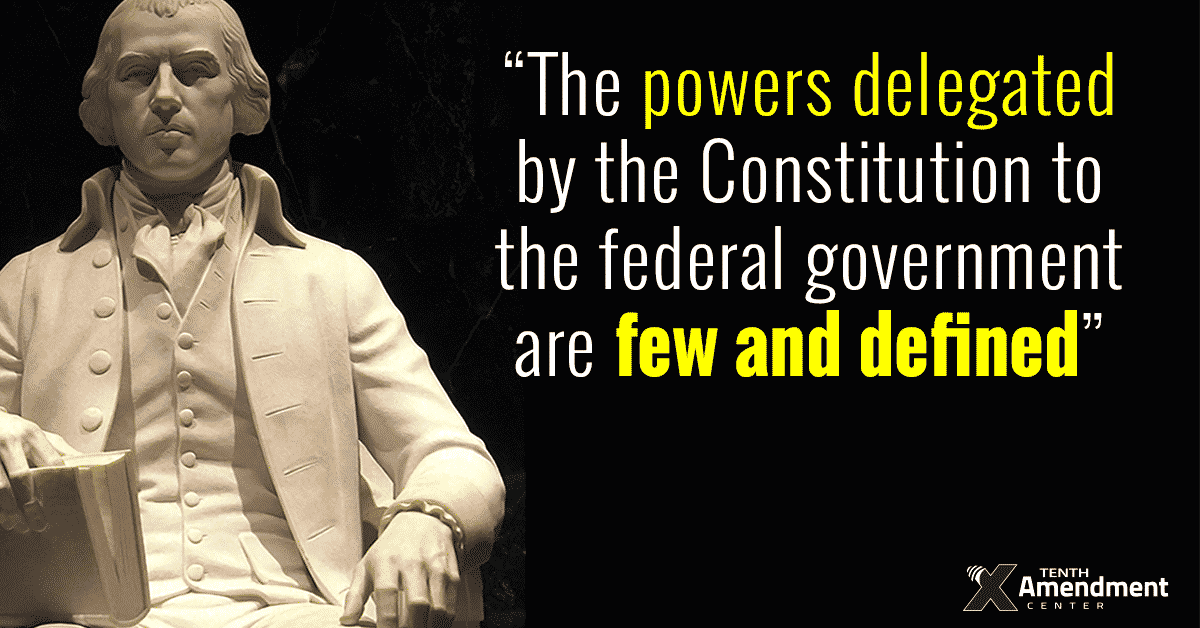
The Declaration of Independence does not open with a theory. It opens with a statement of purpose. Government exists to protect the rights of “life, liberty, and the pursuit of happiness.” That is the contract. When government fails at that job, or actively works against it, the contract has already been broken by the other…
-

Legitimate government does not arise from force, tradition, or divine appointment. It arises from the consent of the governed. That principle sits at the center of the American founding, embedded in the Declaration of Independence, structured into the Constitution, and tested repeatedly across more than two centuries of political life. Understanding what consent means, how…
-

By Malcolm Lee Kitchen III | Margin Of The Law You were taught that police states exist somewhere else. In textbooks, they live in the Soviet Union, East Germany, Maoist China. The Berlin Wall. The Gulag. The Stasi’s files on one in three East German citizens. You were not taught that the United States built…
-

American law is frequently presented as an orderly and self-correcting system. Civics textbooks describe a government restrained by constitutional boundaries, guided by elected representatives, and checked by institutional friction. Courts are portrayed as neutral arbiters. Agencies are framed as technical experts. Legislatures are described as the exclusive source of binding legal authority. That presentation is…
-

There is a dangerous misconception at the center of modern American governance. Most citizens are taught that government itself is the sovereign. That officials possess authority because institutions exist. That agencies, courts, departments, commissions, and executive offices naturally inherit power through existence alone. That is not how the American system was designed.
-

By Malcolm Lee Kitchen III | MK3 Law Group(c) 2026 – All rights reserved. Rights Without a Path Are Just Words Everyone talks about rights. Constitutional rights, civil rights, statutory rights. Politicians invoke them. Activists demand them. Courts interpret them. The language of rights dominates public discourse about justice in America. Almost nobody talks about…
-

Substantive law answers the questions that determine outcomes. What are your rights? What authority does the government actually possess? What constitutes legal harm? What conduct triggers criminal liability? These are not procedural questions about how to file or where to appear. These are questions about the nature of legal reality itself. Procedural law governs the…
-

Healthcare in the United States operates under one of the densest regulatory frameworks in the administrative state. The decisions that shape your access to care, your out-of-pocket costs, and the range of available treatments originate not in your doctor’s office but in the rulemaking authority of agencies like the Centers for Medicare and Medicaid Services…
-

Color of law describes the condition under which a person uses authority granted by a government position to do something they are not legally permitted to do. The “color” in the phrase means the appearance of legitimacy, not the substance of it. An official acting under color of law looks like they are operating within…