
Discover the Pillars Shaping American Governance
American political ideas regarding liberty and self-government did not suddenly emerge full-blown at the moment the colonists declared their independence from Britain. The varied strands of what became the American republic had many roots, reaching far back in time and across the Atlantic Ocean to Europe. Indeed, it was not new ideas but old ones that led the colonists to revolt and form a new nation.

Historical Documents Overview
The architecture of American self-governance predates its founding documents by centuries.

Key Intellectual Influences
The colonists who produced American political philosophy were not abstract theorists operating from the comfort of academic institutions.

Significant Constitutional Debates
The debates that produced these documents were not polite academic exercises conducted in comfortable circumstances.
Discover the Roots of American Governance
Classical republicanism is a commitment to the notion that a nation ought to be ruled as a republic, in which selection of the state’s highest public official is determined by a general election, rather than through a claim to hereditary right. Republican values include civic patriotism, virtuous citizenship and property-based personality. Developed during late antiquity and early renaissance, classic republicanism differed from early liberalism insofar as rights were not thought to be granted by God in a pre-social state of nature, but were the products of living in political society.
Key Historical Documents
Examine foundational texts such as the Declaration of Independence and the Articles of Confederation that shaped early American political thought.
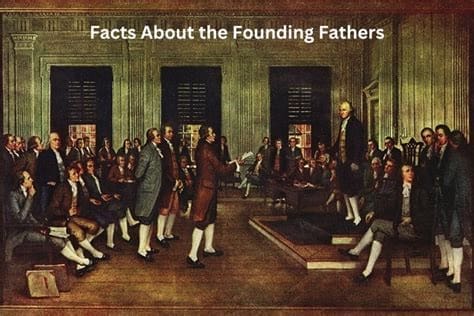
Intellectual Influences
Understand the impact of Enlightenment thinkers and colonial debates on the development of American governmental structures.
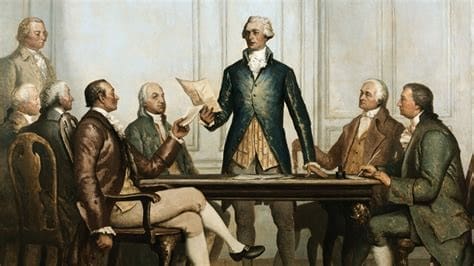
Constitutional Debates
Explore the critical discussions and compromises that led to the framing of the Constitution and the balance of powers.
Explore Foundational Documents
The Federalists, principally Alexander Hamilton, James Madison, and John Jay, constructed the affirmative case for the proposed Constitution with intellectual rigor and strategic purpose. Their arguments, published collectively as The Federalist Papers between 1787 and 1788, advanced three interconnected claims: that effective self-governance required a stronger central government than the Articles of Confederation had provided, that a structured constitutional system capable of maintaining public order was a prerequisite for preserving individual liberty, and that internal instability would ultimately prove more destructive to freedom than well-designed centralized authority.

Historical Context
Examine the political and social conditions that influenced early American governance.

Philosophical Influences
Investigate the Enlightenment thinkers whose ideas underpin American political theory.

Constitutional Debates
Understand the critical discussions and compromises during the framing of the Constitution.
Delve into the Core Documents
Discover key writings and artifacts that define the origins and principles of American government.




Understanding the Foundations
On the classical republican view of liberty, citizens exercise freedom within the context of existing social relations, historical associations and traditional communities, not as autonomous individuals set apart from their social and political ties. In this way, liberty for the classical republican is positively defined by the political society instead of negatively defined in terms of the pre-social individual’s natural rights.

Step One: Intellectual Origins
Explore the Enlightenment ideas and early political philosophies that laid the groundwork for American political thought and constitutional development.

Step Two: Founding Documents
Review key texts like the Declaration of Independence and Articles of Confederation to see how the nation’s legal framework began to take shape.

Step Three: Constitutional Debates
Understand the critical discussions and compromises that influenced the drafting and ratification of the United States Constitution.