
Discover the Dynamics of Surveillance and Control
You were taught that police states exist somewhere else. In textbooks, they live in the Soviet Union, East Germany, Maoist China. The Berlin Wall. The Gulag. The Stasi’s files on one in three East German citizens.
You were not taught that the United States built its own version, dubbed the American Police State. It did not build it overnight, and it did not announce it. It built it piece by piece, program by program, statute by statute, across seven decades. The architecture is still standing. Most of it is legal. Understanding these institutional dynamics is essential for designing oversight mechanisms capable of producing different outcomes.

Comprehensive Analysis of Policing Structures
The expansion of law enforcement in the United States is not an accidental byproduct of rising crime rates; it is the deliberate construction of a proactive, technological, and administrative apparatus designed to manage the population

Insights into Surveillance Infrastructure
The modern surveillance infrastructure is the physical and digital nervous system of the contemporary state. It is not a passive tool but an active, aggressive architecture designed to achieve two primary ends: the total transparency of the citizenry and the total opacity of state power.

Understanding Administrative Influence
The “Administrative State” represents the most significant shift in governance since the founding of the republic. It is the silent, pervasive mechanism by which power is consolidated away from the public and toward an unelected, self-perpetuating class of bureaucrats.
Unraveling the Complexities of the American Control State
Several fundamental questions about surveillance technology governance remain inadequately addressed. The mechanisms through which law enforcement agencies internally justify continued investment in systems that independent audits find ineffective merit examination. The accuracy and integrity of surveillance technology data also requires sustained independent scrutiny.
Understanding these institutional dynamics is essential for designing oversight mechanisms capable of producing different outcomes.

Surveillance State Impact
The proliferation of high-tech surveillance tools like facial recognition, cell-site simulators, and predictive algorithms has effectively abolished the concept of a “private space” in public. The consequences of this pervasive monitoring are felt most acutely in the erosion of foundational civil liberties.

Administrative State Influence
This vast, unelected web of agencies, regulatory bodies, and entrenched bureaucracies is the engine room of the modern surveillance apparatus. This form of governance operates through the accumulation of regulatory authority

Data Centers and Control
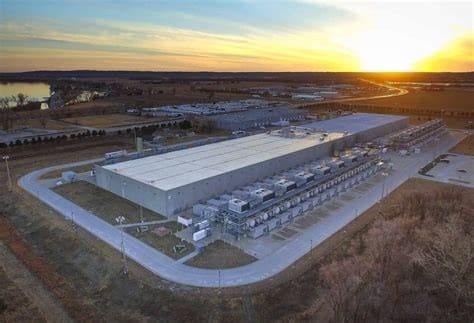
The modern data center is no longer merely a repository for information; it is the physical foundation of the sovereign state’s expanded sensory apparatus. By concentrating the processing power for the nation’s digital life into a finite number of massive, interconnected hubs, the government has created a central “brain” for the surveillance state.

Interconnected Governance
This synergy fundamentally changes the nature of “societal order.” It is no longer about maintaining the peace; it is about maintaining a manageable population. This apparatus is not a conspiracy; it is a systemic convergence.

In-Depth Analysis of Surveillance and Control Data
The surveillance infrastructure assembled by American law enforcement over the past decade represents one of the most consequential expansions of government monitoring capability in the nation’s history. Yet this expansion proceeded with minimal public deliberation, inadequate legislative oversight, and a performance record that consistently falls short of vendor representations.
Understanding these institutional dynamics is essential for designing oversight mechanisms capable of producing different outcomes.
15,000+
Surveillance Incidents Documented
Data indicates that the deployment of surveillance technology is deep and rapidly accelerating. Current repositories tracking these deployments have documented over 15,000 specific data points across more than 6,000 jurisdictions.
4,000
Data Center Operations
As of mid-2026, there are approximately 4,000 existing data centers operational in the United States. Current trackers indicate that nearly 3,000 data centers are already in various stages of active construction with 2,900 additional facilities between 2026 and 2030
90
Legislative Measures Enacted
The legislative process in the current Congress, while ostensibly producing nearly 90 public laws since January 2025, serves as a mechanism to periodically refresh, extend, and normalize the legal foundations of the surveillance state.
54%
Public Sentiment Index
A clear majority explicitly categorize AI-powered mass surveillance as “too dangerous” and a violation of fundamental civil liberties. 70% of the public agrees that utilizing AI to monitor Americans without a court-issued warrant is a direct violation of the Fourth Amendment.

Uncover Insights on the American Control State
The police state in America was not declared. It was assembled across seven decades through statutes, court decisions, program authorizations, and budget allocations. The components are documented. The legal citations are in the public record. The surveillance programs are partially disclosed. The forfeiture numbers are published annually by the Department of Justice. The Church Committee report is available in full text.
Understanding these institutional dynamics is essential for designing oversight mechanisms capable of producing different outcomes.

Surveillance State Mechanics
Over the past decade, American law enforcement agencies have systematically constructed one of the most expansive surveillance infrastructures in the history of democratic governance.

Administrative State Influence
Ultimately, the administrative state is a mechanism for turning the nation into a managed, monitored, and compliant grid. The administrative state is the ultimate expression of power decoupled from responsibility.
Role of Data Centers
Ultimately, data centers are the physical manifestation of the state’s ambition to replace individual liberty with managed, data-driven compliance. They are the gatekeepers of the digital grid.

Uncover the Realities of the American Control State
These technologies persist not primarily because of demonstrated effectiveness, but because of institutional momentum, sustained vendor lobbying, federal funding incentives, and the enduring appeal of technological responses to complex social challenges. The evidence base assembled through government audits, litigation, and public records advocacy provides a foundation for the rigorous policy reassessment these systems require.