
By Malcolm Lee Kitchen III | Margin Of The Law
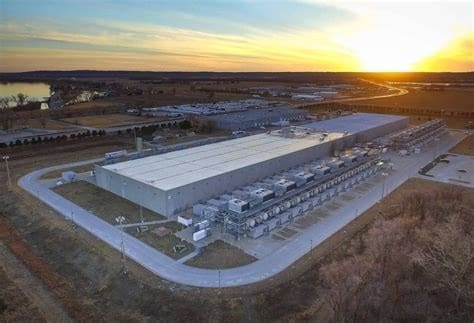
Data centers are the physical foundation of modern surveillance. They provide the storage capacity and computing power required to convert human activity, movement, financial transactions, private communications, biometric records, into machine-readable data at a scale the state can actually use. Without this infrastructure, the current scope of government oversight would be technically impossible to sustain.
This is not a theoretical concern. It is an engineering reality with direct consequences for every citizen operating inside the digital economy.
THE INFRASTRUCTURE OF TOTAL OVERSIGHT
Data centers are built to do one thing exceptionally well: ingest, normalize, and store data from thousands of sources simultaneously. CCTV networks, license plate readers, internet traffic, and administrative databases all feed into the same centralized processing backbone. The output is a permanent, searchable record attached to every citizen. A digital file that grows continuously and never expires.
The computing clusters inside these facilities run AI-driven behavioral models against that historical record in real time. Agencies no longer wait for a crime to occur. They use these systems to calculate the probability of future actions, flag behavioral patterns, and identify potential dissent before it materializes. The state’s function has shifted from reacting to managing. That is a significant change in the relationship between government and citizen, and it has received almost no public deliberation.
Administrative interconnectivity compounds the problem. Agencies that once operated in isolation, the Department of Motor Vehicles, tax authorities, law enforcement, now share the same centralized infrastructure. They exchange data instantly and without friction. The result is a complete, consolidated profile of each citizen. One that crosses jurisdictions, combines records, and updates in real time. There is no longer a wall between your tax file and your travel record. There is no longer a separation between your financial history and your interactions with law enforcement. The data moves freely between agencies. You do not.
THE ASYMMETRY THAT MAKES CONTROL POSSIBLE
Citizens inside this system face a structural disadvantage that has no precedent in prior generations. The state holds total visibility into private life. The citizen holds none into the systems managing theirs.
You do not know what is being stored. You do not know how it is being analyzed. You do not know which agencies have access to your records, under what authority, or for what purpose. The state operates with complete informational advantage. That asymmetry is not accidental. It is the core mechanism through which the system functions.
The off-grid option, once a real alternative for individuals who chose to minimize their exposure to state systems, has been methodically closed. Financial participation, professional licensing, and social function are now routed through digital infrastructure that terminates in these data centers. To engage in the modern economy is to generate a continuous data stream that feeds state records. Opting out is no longer a practical choice for most people. It has been engineered out of reach.
What replaces individual choice is algorithmic management. Access to capital, travel authorization, government benefits, and increasingly employment, are determined by models running inside these facilities. Those models are shielded from public examination. Proprietary claims, security classifications, and technical complexity function as a wall between the citizen and the system making decisions about their life. You can be denied. You will not always be told why. You cannot audit the data used to reach that decision. You cannot challenge a model you cannot see.
This is governance by black box. It is structurally incompatible with the principles of a constitutional republic, where government answers to the people and rights do not require institutional permission to exercise.
THE SCALE OF THE BUILD-OUT
The expansion of data center capacity across the United States is not being driven by consumer demand. The framing that this growth reflects the needs of a digitally active population is institutional fog. The capital investment, running into the trillions of dollars, reflects a strategic commitment to expanding the state’s capacity for population oversight.
Physical infrastructure does not change with elections. When a data center is built, the surveillance capability it enables becomes a permanent feature of the landscape. Political transitions do not dismantle concrete and fiber. They inherit what was built before them and add to it. Each administration receives more capability than the last. The baseline of monitoring expands in one direction.
Over time, the population adapts to that baseline. Constant data-driven monitoring comes to feel like a feature of modern life rather than an imposition on it. Citizens are conditioned to accept observation as the cost of efficiency, convenience, and access. That conditioning is not incidental. It is the designed outcome of a system that needs public tolerance to function without resistance.
WHAT THIS MEANS IN PRACTICE
Three conditions now define the citizen’s position inside this infrastructure.
First, the record is permanent. Everything entered into systems connected to this backbone is retained and searchable. There is no practical statute of limitations on digital records held by the state. Data collected a decade ago can be queried today against new parameters.
Second, the analysis is opaque. The behavioral models running against your data are not subject to public audit. The criteria used to flag, classify, or penalize individuals are not disclosed. Decisions produced by these systems carry consequences you can experience but cannot fully examine or contest.
Third, participation is mandatory. Withdrawal from the systems feeding these data centers is not a realistic option for most citizens. The infrastructure of daily life, banking, employment, healthcare, transportation, has been integrated with the digital grid these facilities anchor. The choice to opt out is the choice to lose functional access to modern society.
These are the terms the state has set. They were not put to a public vote. They were not subject to meaningful legislative debate. They were built, expanded, and normalized over decades while public attention was directed elsewhere.
Data centers are not neutral infrastructure. They are the physical expression of a decision about the relationship between the state and the individual. That relationship, as currently constructed, runs in one direction. The state accumulates. The citizen is accumulated. Recognizing that structure is the first requirement for operating with any meaningful degree of autonomy inside it.
© 2026 – MK3 Law Group
For republication or citation, please credit this article with link attribution to marginofthelaw.com.