
Constitutional Analysis • Civic Education • Investigative Research
Tag: Tyranny
-

If you live in the United States of America, you live in a giant prison where liberty and freedom are slowly being strangled to death. In this country, the control freaks that run things are obsessed with watching, tracking, monitoring and recording virtually everything that we do. Nothing is private anymore. Everything that you do…
-

The United States has constructed, over decades and across administrations of both parties, a vast apparatus of state control that many legal scholars, civil libertarians, and international human rights organizations now describe as a police state. This report documents that apparatus across ten interconnected dimensions: mass surveillance, police militarization, mass incarceration, civil asset forfeiture, qualified…
-

In the early 1990s, a man named George Hunt attended a high-level environmental conference and came back with recordings. What he documented was not a gathering of concerned scientists debating carbon cycles. It was a planning session. The language used by attendees was direct enough that it required no interpretation. Ordinary people were referred to…
-

ISRAEL HAS CONDUCTED ESPIONAGE in the United States, especially economic espionage, since its creation in 1948. This espionage principally targets military and dual use items (goods and technology with civilian and military uses) and furthers strategic as well as economic objectives. This article examines the scope and nature of this activity, its distinctiveness, its apparent…
-

Totalitarianism does not announce itself. It builds. It uses familiar language, trusted institutions, and widely shared fears to establish control incrementally. By the time it becomes recognizable, significant ground has already been ceded. That is the pattern Arendt documented. That is the pattern worth examining now. The Polish lawyer and Member of the European Parliament…
-

America is not in political crisis because the system is broken. It is in political crisis because the system works exactly as designed. That distinction matters more than almost anything else being said about American politics right now. Our founding fathers has written and warned us about this extensively. Yet here we are, again. The…
-

our information footprint is enormous. But the government’s appetite for collecting it is larger. Federal, state, and local agencies now track the who, what, when, where, and how of your private life with tools that did not exist twenty years ago and with legal authority that is vague by design. Most of it happens without…
-

Mass surveillance sits at the center of a growing debate about individual agency, freedom, and self-governance. The question is not simply whether data is being collected. It is who collects it, under what rules, and with what consequences for the people being watched. Over the past two decades, a specific critique has taken shape under…
-

The insurance industry has built one of the most effective wealth transfer systems in modern economic history. Not through better products. Not through genuine competition. Through a simpler method: it embedded itself so completely into the architecture of daily life that opting out carries legal consequences. Mandatory participation, enforced by the state, rebranded as risk…
-

There is a structure of power operating inside the United States that controls more wealth than most nations on Earth. It writes legislation that lawmakers pass without reading. It funds the offices that count your votes. It trains the journalists who shape what you believe. It sues federal agencies into adopting rules that Congress never…
-

By Malcolm Lee Kitchen III | Margin Of The Law What if the majority had simply said no? Not with violence. Not with anger or hatred. But with quiet, unwavering conviction. Imagine waking up one morning and millions of people did not go to work. The roads are empty. The trains are quiet. The offices…
-
Mind Control, why and how transhumanism is forced upon you By Malcolm Lee Kitchen III | Margin Of The Law Introduction It may seem unbelievable to you, but you are a cyborg today. Not the metaphor of a half human, half robot individual, but a cyborg today in reality. Conscious or unconscious, willingly or not,…
-

For some of us, David E. Martin’s role in this operation was clear the moment he sat down with Mikki Willis for an interview. If you understand that the COVID-19 story is a psychological operation, then David’s bioweapon claims look like a red herring from the start. If you don’t yet see COVID-19 that way,…
-

By Malcolm Lee Kitchen III | Margin Of The Law The claim that US and Israeli intelligence maintain a special relationship is not conspiracy. It is documented. Wolf Blitzer stated it plainly: US and Israeli intelligence organizations have maintained a discreet arrangement since the 1950s, banning covert operations against each other. Allen Dulles architected that…
-
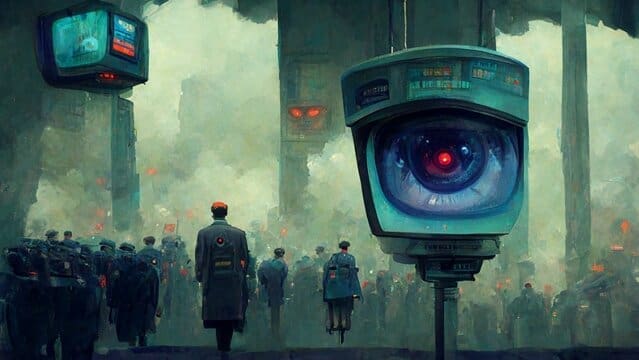
A private company now scans 20 billion license plates every month, feeds that data to over 5,000 law enforcement agencies across 49 states, and is quietly expanding into microphones, drones, and AI profiling. Here is what that means for every American who drives a car.
-

The Fourth Amendment to the United States Constitution emerged from direct experience with government overreach. The founders had lived under British rule, where agents of the Crown searched homes without cause, intercepted correspondence, and tracked movements through colonial towns. That experience produced one of the most direct constitutional protections in American history: the right of…
-

This report documents human experimentation conducted or approved by agencies of the United States government, from the earliest recorded cases in the 1830s through 2026. It is organized into two sections. The first section covers experiments that were unambiguously unethical because subjects had no meaningful opportunity to consent, were deceived about the nature of what…
-
The official story is simple. Lyme disease emerged naturally in the northeastern United States during the early 1970s. A bacteria called Borrelia burgdorferi had existed in North American tick populations for millennia. Changing land use patterns, deer population growth, and expanding suburban development pushed infected ticks into contact with humans. The disease was identified, named,…
-

By Malcolm Lee Kitchen III | Margin Of The Law A data broker has spent years selling raw location data on individual Americans to federal, state, and local law enforcement agencies. The Electronic Frontier Foundation confirmed this after filing more than 100 public records requests across several months. The company is called Fog Data Science.…
-

Walmart operates one of the most sophisticated surveillance infrastructures in American retail. What shoppers encounter is not simply closed-circuit television monitoring aisles for theft. The network is an AI-integrated data fusion system that combines computer vision, behavioral analytics, loyalty program information, and wireless device tracking into a unified surveillance apparatus.