
Constitutional Analysis • Civic Education • Investigative Research
Category: Tyranny Fundamentals
-

The United States has constructed, over decades and across administrations of both parties, a vast apparatus of state control that many legal scholars, civil libertarians, and international human rights organizations now describe as a police state. This report documents that apparatus across ten interconnected dimensions: mass surveillance, police militarization, mass incarceration, civil asset forfeiture, qualified…
-

In the early 1990s, a man named George Hunt attended a high-level environmental conference and came back with recordings. What he documented was not a gathering of concerned scientists debating carbon cycles. It was a planning session. The language used by attendees was direct enough that it required no interpretation. Ordinary people were referred to…
-

While the evidence indicates that the Israelis had prior knowledge of 9-11, commonly-held misconceptions about Israel and a general lack of understanding of Zionism’s brutal history of terrorism prevent most people from comprehending the Israeli connection. An ignorance of Zionist history, cultivated by the controlled media, prevents people from understanding reality in the Middle East.…
-

Totalitarianism does not announce itself. It builds. It uses familiar language, trusted institutions, and widely shared fears to establish control incrementally. By the time it becomes recognizable, significant ground has already been ceded. That is the pattern Arendt documented. That is the pattern worth examining now. The Polish lawyer and Member of the European Parliament…
-

Mass surveillance sits at the center of a growing debate about individual agency, freedom, and self-governance. The question is not simply whether data is being collected. It is who collects it, under what rules, and with what consequences for the people being watched. Over the past two decades, a specific critique has taken shape under…
-

There is a structure of power operating inside the United States that controls more wealth than most nations on Earth. It writes legislation that lawmakers pass without reading. It funds the offices that count your votes. It trains the journalists who shape what you believe. It sues federal agencies into adopting rules that Congress never…
-

By Malcolm Lee Kitchen III | Margin Of The Law What if the majority had simply said no? Not with violence. Not with anger or hatred. But with quiet, unwavering conviction. Imagine waking up one morning and millions of people did not go to work. The roads are empty. The trains are quiet. The offices…
-

BMW CHARGED YOU TO USE YOUR OWN SEAT. GM SOLD YOUR DATA. THE FEDERAL GOVERNMENT IS PUTTING CAMERAS IN YOUR NEXT CAR. None of this is speculation. The records are public. The investigations are published. The legislation is signed. Here is what happened and what it means for anyone who owns or buys a car.
-

The American Constitutional Republic was founded on a specific premise: government answers to the people. Rights are not granted by the state; they are held by the individual and protected from the state. What has been built over the past two decades inverts that premise. The state now holds the information, the infrastructure, and the…
-
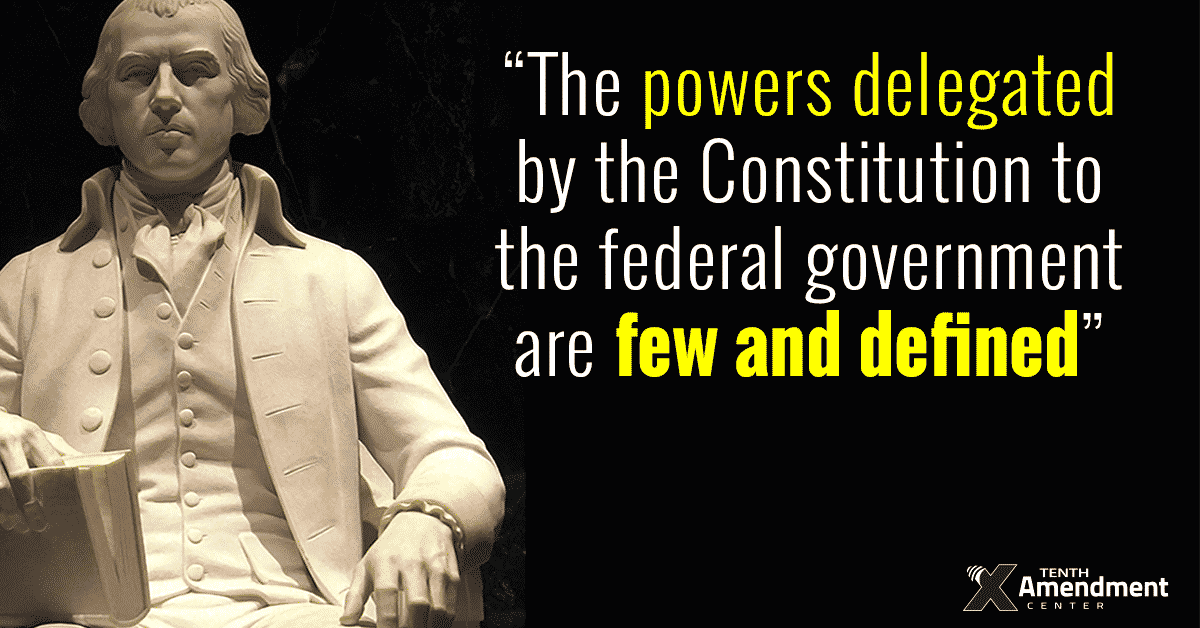
The Declaration of Independence does not open with a theory. It opens with a statement of purpose. Government exists to protect the rights of “life, liberty, and the pursuit of happiness.” That is the contract. When government fails at that job, or actively works against it, the contract has already been broken by the other…
-

The United States was built on a foundational commitment to limited government, individual liberty, and free-market competition. These principles did not emerge by accident. They were deliberate, hard-won, and codified through centuries of political thought, revolution, and constitutional design. Yet something has shifted inside the institutions responsible for transmitting those principles to the next generation.
-

Modern First Amendment jurisprudence has organized itself around tiers of judicial scrutiny. Rational basis review is the minimum standard of constitutionality. Strict scrutiny is the most demanding. In between sits intermediate scrutiny. Laws that regulate speech based on its content receive strict scrutiny, with one significant exception: commercial speech restrictions typically receive intermediate scrutiny. Laws…
-

George Washington understood how republics die. His Farewell Address, delivered September 19, 1796, was not ceremonial rhetoric offered by a retiring statesman. It was a precise, urgent warning about the internal forces that destroy free governments. While Americans remain consumed by the spectacle of modern political combat, they continue to ignore the founder’s most critical…
-

While public attention cycles through trade disputes, cultural flashpoints, and personality conflicts, a parallel architecture is being assembled. Digital identity systems. Centralized financial controls. Data infrastructure. Injection programs tied to surveillance networks. Each piece connects to the others. Together, they form something with no precedent in American history. You need to understand what each component…
-

By Malcolm Lee Kitchen III | MK3 Law Group(c) 2026 – All rights reserved. Introduction The United States did not become a surveillance state overnight. Its construction was deliberate and executed through legal mechanisms, classified programs, corporate partnerships, and strategic fear narratives deployed at politically convenient moments. From the early 1990s to the present day,…
-

Something significant is happening to the legal definition of terrorism in the United States. What began as a narrowly scoped framework targeting foreign actors with demonstrable ties to organized violence has been systematically broadened. The trajectory is not subtle. Post-2001 legislation, executive orders, and internal agency reclassifications have steadily expanded the category of “domestic terrorist”…
-

By Malcolm Lee Kitchen III | Margin Of The Law(c) 2026 – All rights reserved. The Oath and What It Means Every sworn defender of the Republic remembers the moment they raised their right hand and spoke those words: “to support and defend the Constitution of the United States against all enemies, foreign and domestic.”…
-
By Malcolm Lee Kitchen III | MK3 Law Group(c) 2026 – All rights reserved. Introduction Parts 1 and 2 of this series established two foundational points. First, the United States became a surveillance state through incremental construction: policy by policy, crisis by crisis, contract by contract. Second, the system was not built as a single…
-
Part 1 and Part 2 Combined By Malcolm Lee Kitchen III | MK3 Law Group(c) 2026 – All rights reserved. Introduction The United States did not build a surveillance state. It built a surveillance economy. That distinction matters. A state-run surveillance apparatus can, at least in theory, be dismantled through legislation, litigation, or political will.…