
Constitutional Analysis • Civic Education • Investigative Research
Category: Constitution Fundamentals
-
Whenever we examine law, and whatever the law is we are examining, it must be compared to the Constitution of these united States of America. Any statute, ordinance, regulation, order, commandment, directive, or guideline throughout the entire land of this country whether local, State, Federal, or even those the U.N. would demand we enforce, must be…
-

If you live in the United States of America, you live in a giant prison where liberty and freedom are slowly being strangled to death. In this country, the control freaks that run things are obsessed with watching, tracking, monitoring and recording virtually everything that we do. Nothing is private anymore. Everything that you do…
-

The federal government has a boundary problem. Not a policy problem. Not a leadership problem. A boundary problem. The Constitution sets the limits. The federal government ignores them. And most Americans have been conditioned to accept that as normal. It is not normal. The Constitution is not a flexible document. It is not a mood…
-

By Malcolm Lee Kitchen III | Margin Of The Law Every day, politicians, news anchors, and textbooks describe America as a democracy. They say it so often and so confidently that most people never think to question it. You should question it. Because the word they are using is wrong, and the difference is not…
-

By Malcolm Lee Kitchen III | Margin Of The Law The American Constitution was built to limit government, not empower it. Its purpose is not to grant you freedoms. It restrains the government from infringing on freedoms you already possess as a human being. That is not theory. That is the core legal and historical…
-
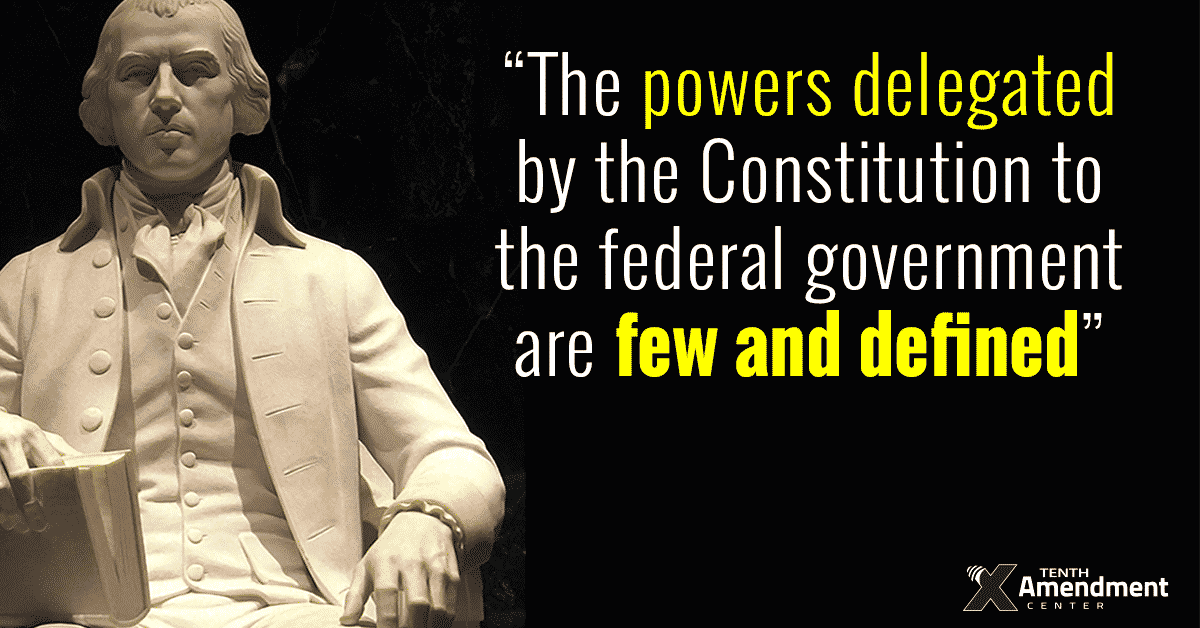
The Declaration of Independence does not open with a theory. It opens with a statement of purpose. Government exists to protect the rights of “life, liberty, and the pursuit of happiness.” That is the contract. When government fails at that job, or actively works against it, the contract has already been broken by the other…
-

Legitimate government does not arise from force, tradition, or divine appointment. It arises from the consent of the governed. That principle sits at the center of the American founding, embedded in the Declaration of Independence, structured into the Constitution, and tested repeatedly across more than two centuries of political life. Understanding what consent means, how…
-

Modern First Amendment jurisprudence has organized itself around tiers of judicial scrutiny. Rational basis review is the minimum standard of constitutionality. Strict scrutiny is the most demanding. In between sits intermediate scrutiny. Laws that regulate speech based on its content receive strict scrutiny, with one significant exception: commercial speech restrictions typically receive intermediate scrutiny. Laws…
-

How a Single Word Became the Most Effective Political Weapon in Modern America By Malcolm Lee Kitchen III | MK3 Law Group(c) 2026 – All rights reserved. Every political conversation in America carries a hidden assumption. It sits underneath the debates about policy, underneath the arguments about candidates, underneath the noise of every election cycle.…
-

By Malcolm Lee Kitchen III | MK3 Law Group(c) 2026 – All rights reserved. The Constitutional Foundation of the Right to Travel The right to travel freely is not a privilege granted by government. It is a fundamental right that predates the Constitution itself, recognized across centuries of American jurisprudence and embedded in the legal…
-
By Malcolm Lee Kitchen III | MK3 Law Group(c) 2026 – All rights reserved. The Architecture of Constraint The American experiment was never designed to be a museum piece. It was not a set of polite suggestions for the management of public affairs. The Constitution was built as a functioning machine, a kinetic system of…
-

The American constitutional system did not emerge in isolation, nor was it the product of a single generation’s insight. It represents the culmination of a prolonged intellectual, philosophical, and political evolution shaped by Enlightenment thought, revolutionary literature, and intense public debate. This white paper examines three foundational pillars of American governance:
-
Thomas Paine | A Professional Analysis and Restatement By Malcolm Lee Kitchen III | MK3 Law Group(c) 2026 – All rights reserved. Introduction and Historical Context Thomas Paine’s Common Sense, published in January of 1776, stands as one of the most consequential and widely circulated political documents in the entirety of American history. Its appearance…
-
By Malcolm Lee Kitchen III | MK3 Law Group(c) 2026 – All rights reserved. Summary John Locke (1632–1704) stands among the most influential political philosophers in the history of Western thought. As the author of A Letter Concerning Toleration (1689), An Essay Concerning Human Understanding (1690), Two Treatises on Government (1690), and numerous other seminal…
-
The Anti-Federalists and their important role during Ratification By Malcolm Lee Kitchen III | MK3 Law Group(c) 2026 – All rights reserved. On September 27, 1787, an anonymous writer in the New York Journal issued a pointed warning to the American public. The newly drafted Constitution, he argued, was not the unambiguous triumph its supporters…
-
By Malcolm Lee Kitchen III | MK3 Law Group(c) 2026 – All rights reserved. Introduction The Federalist Papers represent one of the most significant collections of political writing in American history. Comprising 85 essays written between 1787 and 1788, the papers were designed with a singular purpose: to advocate for the ratification of the United…
-
By Malcolm Lee Kitchen III | MK3 Law Group(c) 2026 – All rights reserved. It was gun control. Not taxation. Not representation. Not the abstract grievances that get cleaned up and packaged into textbook summaries. The fighting at Lexington and Concord on April 19, 1775, was triggered by a British military operation to seize colonial…
-
Most people treat the Constitution as a government document. They think of it as something Washington produced, something courts interpret, something officials swear to uphold. That framing is understandable. It is also wrong. The Constitution is not a product of government. Government is a product of the Constitution. And the Constitution itself is a product…