
Discover the Cornerstones of the American Republic
Most people treat American government as a subject to survive, not a system to understand. That approach leaves you at a disadvantage.
These three documents are not museum pieces. They are the architecture of power in this country. They define where authority comes from, where it stops, and where you stand in relation to it.
Read separately, they seem like history. Read in sequence, they become a working tool. You can use them to evaluate what government is actually doing versus what it is permitted to do.
That distinction matters now more than ever. Know the structure. Know where the lines are. Know how to use them.


Declaration of Independence
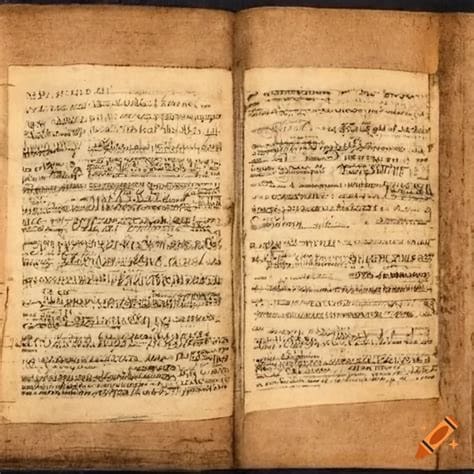
This document told a king his power meant nothing. Rights don’t come from crowns or governments. They’re inherent. The people hold authority, not thrones. That truth didn’t just change a nation. It changed the world.

United States Constitution
Think of the Constitution as the ultimate rulebook for the government, specifically designed to keep those power-hungry politicians on a very short leash.

Bill of Rights
The Bill of Rights is essentially the ultimate “hands-off” warning to the government, explicitly listing the fundamental freedoms they aren’t allowed to touch, no matter how much they might want to.
Explore America’s Founding Timeline.
Delve into the Declaration of Independence, Constitution, and Bill of Rights to grasp their role in shaping American governance and freedoms.
1776
Declaration of Independence
Adopted in 1776, this document proclaimed the colonies’ freedom from British rule and articulated fundamental rights.
1787
United States Constitution
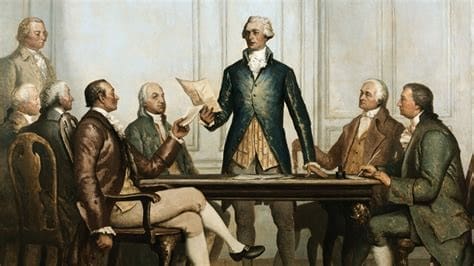
Drafted in 1787, it established the framework for the federal government and the rule of law.
1791
Bill of Rights
Ratified in 1791, it guarantees essential civil liberties and protections for American citizens.
Explore Foundational American Documents
Delve into the Declaration of Independence, Constitution, and Bill of Rights to grasp their vital roles in American governance. You will be taken right to the source, the National Archives, an official government website and institution. This is the best way to learn about these documents.

Declaration of Independence
It’s the ultimate manifesto of liberty, declaring that every man has inherent rights that no crown or government has the authority to trample upon.

United States Constitution
It’s the ironclad contract that defines our rights and keeps the whole shaky project from sliding into total, unbridled chaos.

Bill of Rights
It ensures that things like your right to speak your mind, carry your own steel for defense, and keep the state from barging into your home are carved in stone..
Key Intellectual Influences: The Philosophical Architecture of Governance
The American constitutional system did not emerge in isolation, nor was it the product of a single generation’s insight. It represents the culmination of a prolonged intellectual, philosophical, and political evolution shaped by Enlightenment thought, revolutionary literature, and intense public debate.
By tracing these elements from their philosophical origins through their institutional expression in the United States Constitution, this study provides a structured understanding of how ideas about power, liberty, and governance were translated into a functioning political system.

The Federalist Papers
Written by Alexander Hamilton, John Jay, and James Madison is a collection of 85 essays written between 1787-1788. Published under the pseudonym “Publius,” these articles aimed to persuade New York voters to ratify the proposed Constitution of the United States.

The Anti-Federalist Papers
These were a collection of essays written to oppose ratification of the United States Constitution. Often authored using psuedonyms, they expressed the very real concerns of colonial citizens who feared the potential tyranny of a strong central government.

Common Sense
Written by Thomas Paine, published on January 10, 1776, advocating for American independence from Great Britain. It became an immediate sensation, arguing for a republican form of government and influencing public opinion during the American Revolution.
Key Intellectual Influences: The Philosophical Architecture of Governance Continued
This section highlights key resources designed to support learning and development in various fields.

The Two Treatises of Civil Government
Locke’s most famous work of political philosophy began as a reply to Filmer’s defense of the idea of the divine right of kings and ended up becoming a defense of natural rights, especially property rights, and of government limited to protecting those rights.

The “Tree of Liberty” Letter
In a letter dated November 13, 1787, to William Stephens Smith, the son-in-law of John Adams, Thomas Jefferson used the phrase “tree of liberty“:
“The tree of liberty must be refreshed from time to time with the blood of patriots and tyrants. It is it’s natural manure.”

THE TWO BOOKS
ON THE DUTY OF MAN AND CITIZEN
ACCORDING TO THE NATURAL LAW
Duty is here defined by me as man’s action, duly conformed to the ordinances of the law, and in proportion to obligation. To understand this, it is necessary to treat first of the nature of human action, and also of laws in general.
Explore the Founding Documents
Delve into key historical texts that define the principles and framework of American governance.

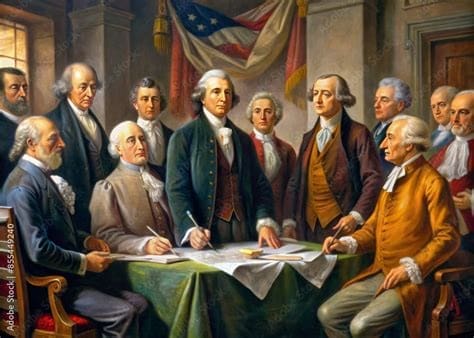

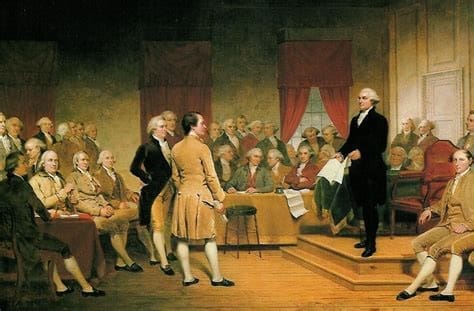
Discover the Foundations of the American Republic
Dive into the core documents that established the United States, understand their enduring impact, and deepen your knowledge of American governance. Learn how these texts continue to influence law and society today.