
Constitutional Analysis • Civic Education • Investigative Research
Tag: Tyranny
-

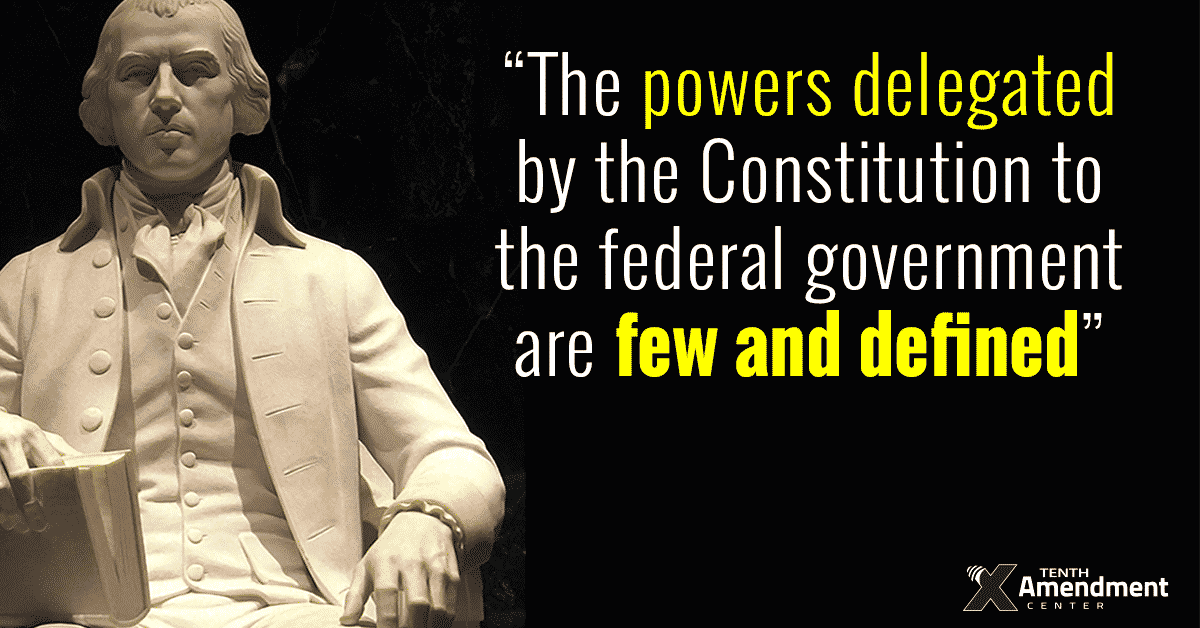
The federal government has a boundary problem. Not a policy problem. Not a leadership problem. A boundary problem. The Constitution sets the limits. The federal government ignores them. And most Americans have been conditioned to accept that as normal. It is not normal. The Constitution is not a flexible document. It is not a mood…
-

BMW CHARGED YOU TO USE YOUR OWN SEAT. GM SOLD YOUR DATA. THE FEDERAL GOVERNMENT IS PUTTING CAMERAS IN YOUR NEXT CAR. None of this is speculation. The records are public. The investigations are published. The legislation is signed. Here is what happened and what it means for anyone who owns or buys a car.
-

The American Constitutional Republic was founded on a specific premise: government answers to the people. Rights are not granted by the state; they are held by the individual and protected from the state. What has been built over the past two decades inverts that premise. The state now holds the information, the infrastructure, and the…
-

By Malcolm Lee Kitchen III | Margin Of The Law The American Constitution was built to limit government, not empower it. Its purpose is not to grant you freedoms. It restrains the government from infringing on freedoms you already possess as a human being. That is not theory. That is the core legal and historical…
-
The Declaration of Independence does not open with a theory. It opens with a statement of purpose. Government exists to protect the rights of “life, liberty, and the pursuit of happiness.” That is the contract. When government fails at that job, or actively works against it, the contract has already been broken by the other…
-

Legitimate government does not arise from force, tradition, or divine appointment. It arises from the consent of the governed. That principle sits at the center of the American founding, embedded in the Declaration of Independence, structured into the Constitution, and tested repeatedly across more than two centuries of political life. Understanding what consent means, how…
-

By Malcolm Lee Kitchen III | Margin Of The Law You were taught that police states exist somewhere else. In textbooks, they live in the Soviet Union, East Germany, Maoist China. The Berlin Wall. The Gulag. The Stasi’s files on one in three East German citizens. You were not taught that the United States built…
-

Real crime scene investigation is not what television taught most people to expect. The CSI franchise and its descendants spent two decades training American audiences to believe that forensic evidence is always recoverable, always conclusive, and always processed by attractive scientists in well-lit laboratories within 48 hours. None of that is accurate.
-

Modern First Amendment jurisprudence has organized itself around tiers of judicial scrutiny. Rational basis review is the minimum standard of constitutionality. Strict scrutiny is the most demanding. In between sits intermediate scrutiny. Laws that regulate speech based on its content receive strict scrutiny, with one significant exception: commercial speech restrictions typically receive intermediate scrutiny. Laws…
-

George Washington understood how republics die. His Farewell Address, delivered September 19, 1796, was not ceremonial rhetoric offered by a retiring statesman. It was a precise, urgent warning about the internal forces that destroy free governments. While Americans remain consumed by the spectacle of modern political combat, they continue to ignore the founder’s most critical…
-

The data broker industry does not operate as a collection of rogue actors. It operates as infrastructure. Brokers function as the logistical backbone connecting mass behavioral data collection to the commercial and governmental entities that consume it. Their products are not incidental byproducts of the digital economy; they are the primary output of a market…
-

While public attention cycles through trade disputes, cultural flashpoints, and personality conflicts, a parallel architecture is being assembled. Digital identity systems. Centralized financial controls. Data infrastructure. Injection programs tied to surveillance networks. Each piece connects to the others. Together, they form something with no precedent in American history. You need to understand what each component…
-
Genomic Surveillance: Methodologies, Infrastructure, and Implications for Public Health and Security
By Malcolm Lee Kitchen III | MK3 Law Group(c) 2026 – All rights reserved. Abstract Genomic surveillance has established itself as a foundational pillar of contemporary public health infrastructure, providing governments, health agencies, and research institutions with the capacity to monitor infectious diseases at the molecular level in near real-time. Through the systematic integration of…
-

By Malcolm Lee Kitchen III | MK3 Law Group(c) 2026 – All rights reserved. Introduction The United States did not become a surveillance state overnight. Its construction was deliberate and executed through legal mechanisms, classified programs, corporate partnerships, and strategic fear narratives deployed at politically convenient moments. From the early 1990s to the present day,…
-

Something significant is happening to the legal definition of terrorism in the United States. What began as a narrowly scoped framework targeting foreign actors with demonstrable ties to organized violence has been systematically broadened. The trajectory is not subtle. Post-2001 legislation, executive orders, and internal agency reclassifications have steadily expanded the category of “domestic terrorist”…