
Constitutional Analysis • Civic Education • Investigative Research
Tag: Surveillance
-

Mass surveillance sits at the center of a growing debate about individual agency, freedom, and self-governance. The question is not simply whether data is being collected. It is who collects it, under what rules, and with what consequences for the people being watched. Over the past two decades, a specific critique has taken shape under…
-

A private company now scans 20 billion license plates every month, feeds that data to over 5,000 law enforcement agencies across 49 states, and is quietly expanding into microphones, drones, and AI profiling. Here is what that means for every American who drives a car.
-

By Malcolm Lee Kitchen III | Margin Of The Law A data broker has spent years selling raw location data on individual Americans to federal, state, and local law enforcement agencies. The Electronic Frontier Foundation confirmed this after filing more than 100 public records requests across several months. The company is called Fog Data Science.…
-
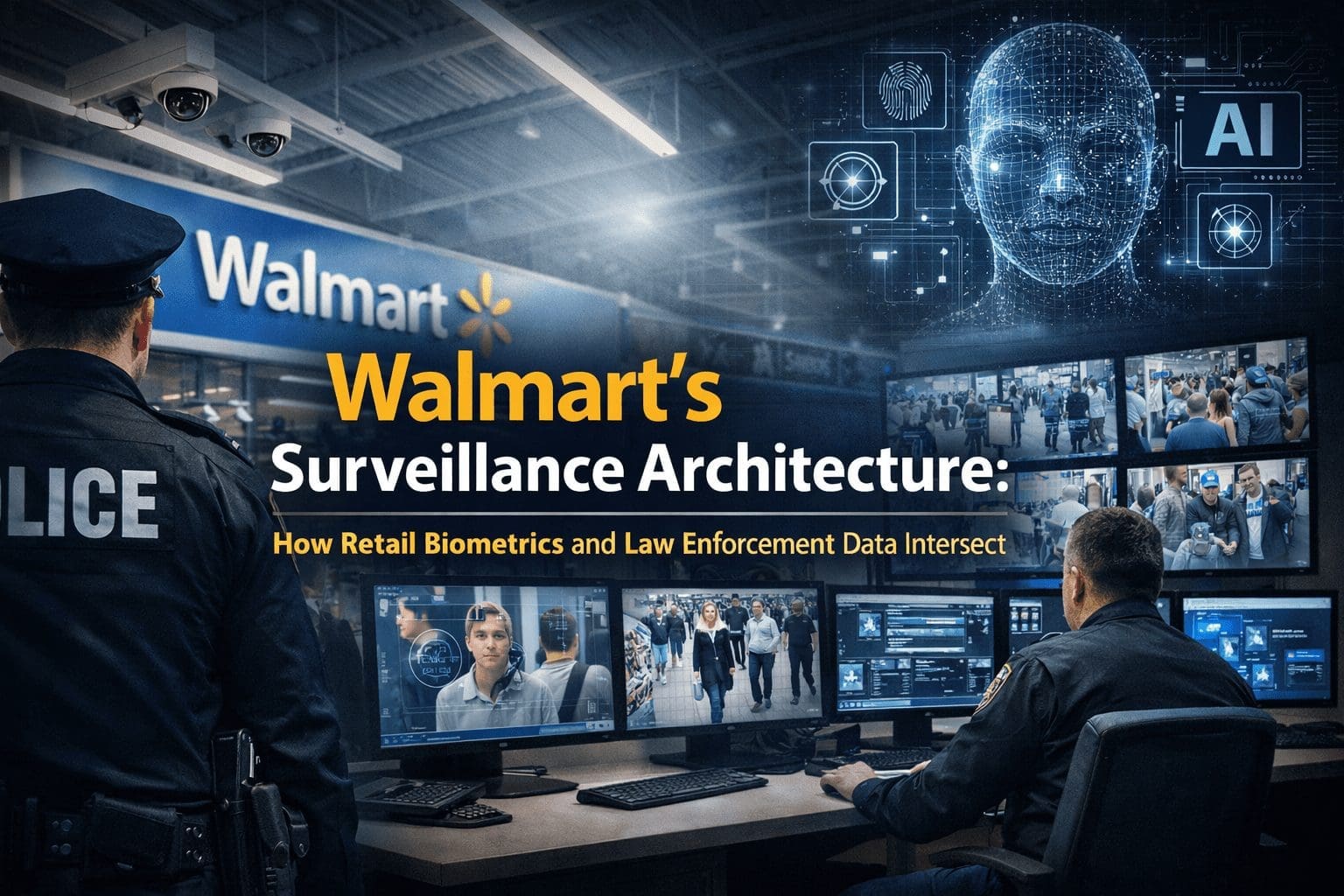
Walmart operates one of the most sophisticated surveillance infrastructures in American retail. What shoppers encounter is not simply closed-circuit television monitoring aisles for theft. The network is an AI-integrated data fusion system that combines computer vision, behavioral analytics, loyalty program information, and wireless device tracking into a unified surveillance apparatus.
-
BMW CHARGED YOU TO USE YOUR OWN SEAT. GM SOLD YOUR DATA. THE FEDERAL GOVERNMENT IS PUTTING CAMERAS IN YOUR NEXT CAR. None of this is speculation. The records are public. The investigations are published. The legislation is signed. Here is what happened and what it means for anyone who owns or buys a car.
-
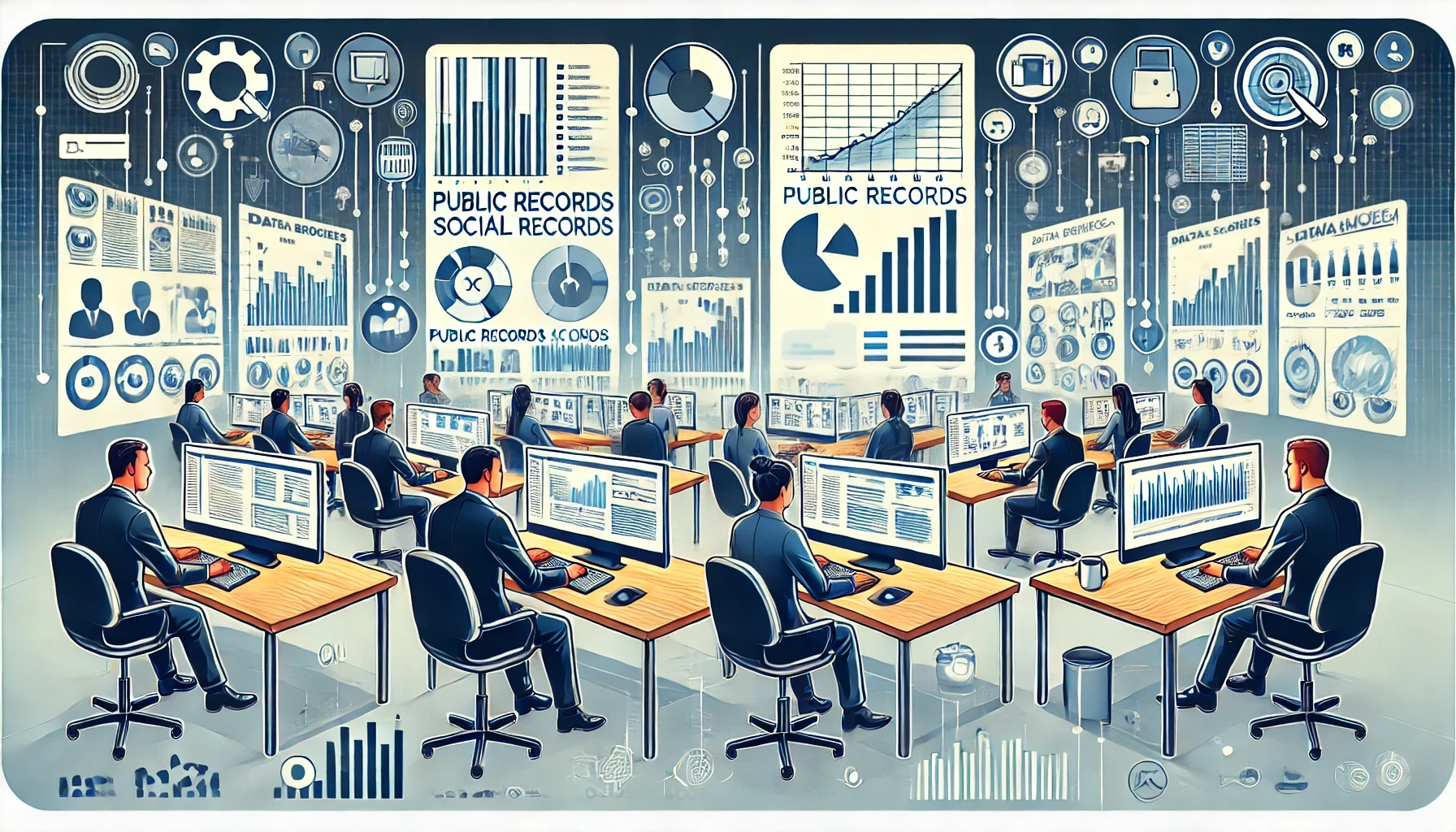
The data broker industry does not operate as a collection of rogue actors. It operates as infrastructure. Brokers function as the logistical backbone connecting mass behavioral data collection to the commercial and governmental entities that consume it. Their products are not incidental byproducts of the digital economy; they are the primary output of a market…
-
By Malcolm Lee Kitchen III | MK3 Law Group(c) 2026 – All rights reserved. Executive Summary Bio-digital surveillance infrastructure constitutes the layered system through which biological data, digital identity systems, sensor networks, and regulatory controls are combined to identify, authenticate, monitor, and manage individuals and populations. In operational terms, this is neither a single machine…
-
By Malcolm Lee Kitchen III | MK3 Law Group(c) 2026 – All rights reserved. Abstract Genetic modification technologies have undergone a fundamental transformation, advancing from relatively imprecise methods of gene transfer to a new generation of highly precise editing systems capable of altering DNA at specific genomic sites, rewriting short nucleotide sequences, regulating gene expression,…
-
By Malcolm Lee Kitchen III | MK3 Law Group(c) 2026 – All rights reserved. Abstract Digital identity integration has emerged as one of the most consequential technological developments of the modern era. As organizations across both public and private sectors seek more reliable and scalable methods of identity verification, the convergence of biometric identifiers and…
-

By Malcolm Lee Kitchen III | MK3 Law Group(c) 2026 – All rights reserved. Introduction Over the past decade, American law enforcement agencies have systematically constructed one of the most expansive surveillance infrastructures in the history of democratic governance. Through the deployment of automated license plate readers, acoustic gunshot detection systems, and predictive policing algorithms,…
-

By Malcolm Lee Kitchen III | MK3 Law Group(c) 2026 – All rights reserved. Introduction The United States did not become a surveillance state overnight. Its construction was deliberate and executed through legal mechanisms, classified programs, corporate partnerships, and strategic fear narratives deployed at politically convenient moments. From the early 1990s to the present day,…
-
By Malcolm Lee Kitchen III | MK3 Law Group(c) 2026 – All rights reserved. A declassified federal watchdog report reveals that the National Security Agency violated surveillance rules years after Edward Snowden’s 2013 disclosures, raising serious questions about the agency’s ability to protect Americans’ privacy rights under Section 702 of the Foreign Intelligence Surveillance Act.…
-
By Malcolm Lee Kitchen III | MK3 Law Group(c) 2026 – All rights reserved. Introduction Parts 1 and 2 of this series established two foundational points. First, the United States became a surveillance state through incremental construction: policy by policy, crisis by crisis, contract by contract. Second, the system was not built as a single…
-
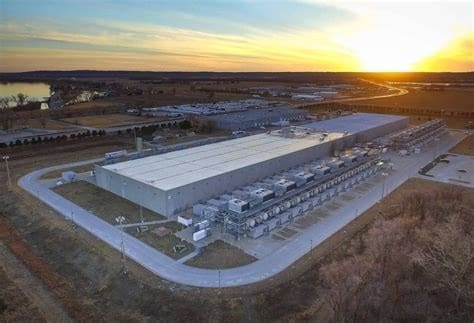
Data centers are the physical foundation of modern surveillance. They provide the storage capacity and computing power required to convert human activity, movement, financial transactions, private communications, biometric records, into machine-readable data at a scale the state can actually use. Without this infrastructure, the current scope of government oversight would be technically impossible to sustain.…
-
A comprehensive investigation into the bio-digital surveillance and control infrastructure being deployed across the United States and European Union
-
The Surveillance State Has Already Won—Unless We Act Now The surveillance state operates nothing like the dystopian fantasies sold to us in movies and books. There are no midnight raids, no torture chambers, no uniformed agents demanding identification. Instead, there are devices we carry willingly, platforms we update eagerly, and systems we embrace as liberation…
-

The United States operates a comprehensive surveillance apparatus that has evolved from post-9/11 data collection into AI-driven governance systems. This analysis examines documented evidence spanning 2013–2026
-

To understand surveillance in modern society, we must examine its legal foundations, technological evolution, and relationship to constitutional principles that were written long before the digital age.