
Understanding the Framework and Functions of Federal, State, and Local Governments
The structure of government in the United States reflects a carefully designed balance of power. Rather than concentrating authority in a single institution, the American system distributes governing power across multiple levels and branches. This design was intentional. The architects of the Constitution sought to create a system capable of governing a large and diverse nation while preventing the concentration of political authority that had historically led to tyranny.
American government operates through two fundamental structural principles. The first is federalism, which divides authority between national and state governments. The second is separation of powers, which distributes authority among different branches within each level of government.
Together, these principles create a layered system of governance that includes federal, state, and local institutions. Each level of government serves distinct functions, yet all operate within a broader constitutional framework.
Understanding how these levels interact is essential to understanding how American democracy functions in practice.
The Constitutional Foundation of Government Structure
The United States Constitution provides the legal foundation for the structure of American government. Ratified in 1788, the Constitution established a national framework capable of governing a growing republic while preserving the autonomy of the individual states.
At the heart of this framework lies the principle that government authority ultimately originates from the people. The opening words of the Constitution, “We the People,” signal that political power flows upward from citizens rather than downward from rulers.
To prevent the abuse of power, the Constitution divides authority in several important ways.
First, authority is separated among three branches of the national government: the legislative branch, the executive branch, and the judicial branch.
Second, power is shared between the federal government and the governments of the individual states.
Finally, state governments delegate certain governing responsibilities to local institutions such as counties, municipalities, and school districts.
This layered system ensures that governance occurs at multiple levels, each responsible for addressing different aspects of public life.
The Federal Government
The federal government represents the national authority of the United States. Its powers are defined primarily by the Constitution and are generally limited to matters that affect the nation as a whole.
The federal government is responsible for areas such as national defense, foreign policy, interstate commerce, currency regulation, immigration, and the protection of constitutional rights.
The structure of the federal government consists of three branches.
The Legislative Branch
The legislative branch is responsible for making federal law. It is composed of the United States Congress, which includes two chambers: the House of Representatives and the Senate.
Members of the House represent congressional districts within individual states and serve two year terms. Senators represent entire states and serve six year terms.
Congress has the authority to pass legislation, approve federal budgets, regulate commerce among the states, declare war, and oversee the activities of the executive branch.
The Executive Branch
The executive branch is responsible for enforcing and administering federal law. The branch is led by the President of the United States, who serves as both head of state and head of government.
The President oversees the federal bureaucracy, directs national defense as commander in chief of the armed forces, negotiates treaties, and implements laws passed by Congress.
The executive branch also includes numerous federal agencies and departments that manage specific policy areas such as transportation, health, education, and environmental protection.
The Judicial Branch
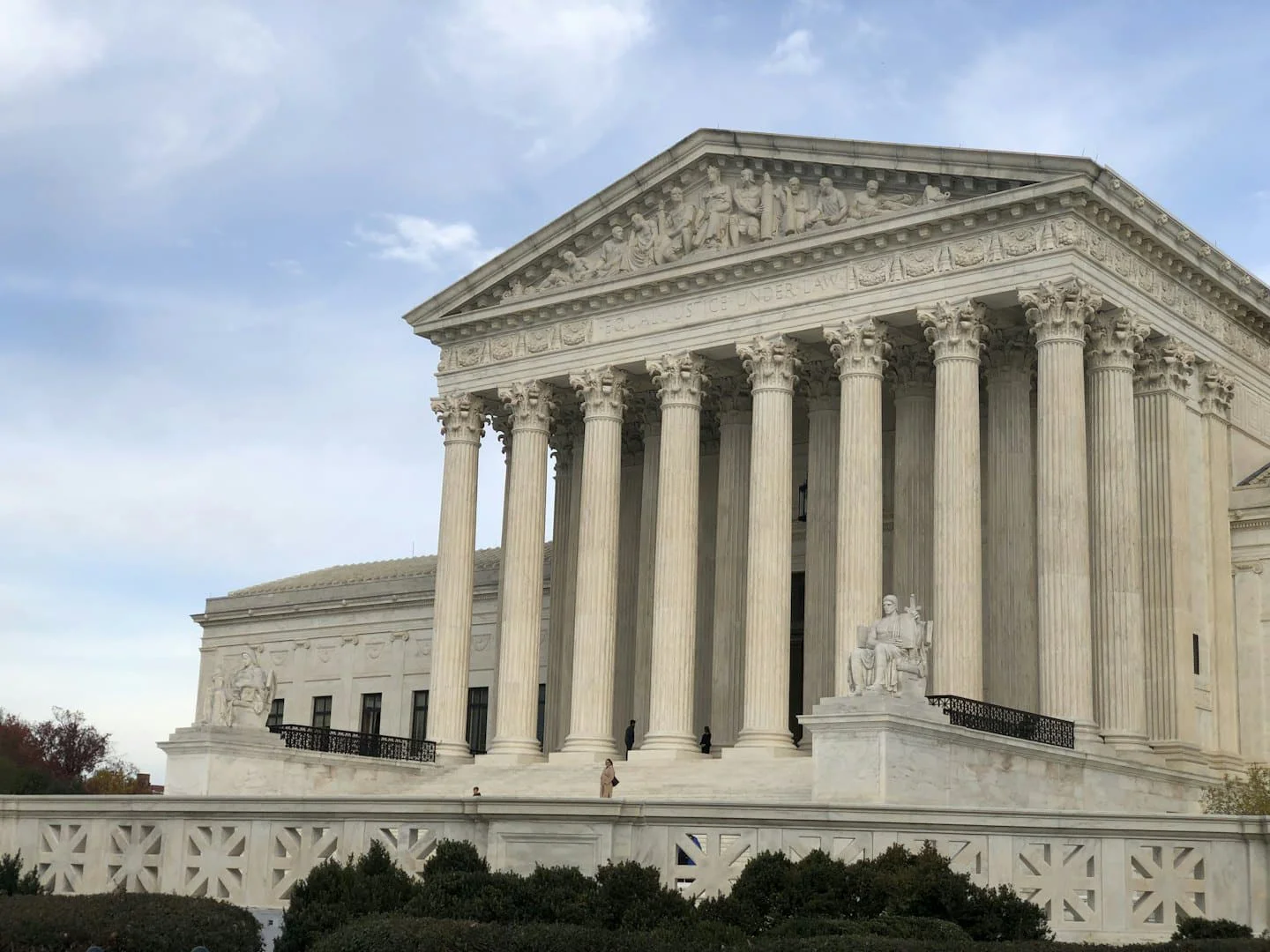
The judicial branch interprets federal law and ensures that government actions comply with the Constitution. The Supreme Court stands at the top of the federal court system, with lower federal courts handling most legal disputes.
Federal courts review cases involving constitutional interpretation, federal statutes, disputes between states, and matters involving federal authority.
Through a process known as judicial review, courts may invalidate laws or government actions that conflict with constitutional principles.
Together, these three branches form the institutional core of the national government.
State Governments
While the federal government addresses national concerns, state governments handle a wide range of issues that affect daily life within their borders.
Each state maintains its own constitution, legislature, executive leadership, and court system. Although state governments mirror the structure of the federal government in many ways, they operate independently within the areas of authority reserved to them by the Constitution.
State governments commonly oversee areas such as education policy, public safety, transportation infrastructure, public health regulation, and the administration of elections.
Because states serve as laboratories for policy innovation, they often develop different approaches to addressing public challenges. This diversity allows states to experiment with solutions that may later influence national policy.
State governments also play a central role in implementing many federal programs, particularly in areas where federal funding supports state administered services.
Local Governments
Local governments operate closest to the daily lives of citizens. These institutions are responsible for managing community level services and addressing issues that require immediate, localized attention.
Local governments typically include counties, cities, towns, and special districts such as school boards or water authorities.
The responsibilities of local governments vary widely depending on the structure of state law, but they commonly include duties such as maintaining public infrastructure, providing police and fire protection, managing public schools, overseeing zoning regulations, and delivering community services.
Because local governments interact directly with residents, they often serve as the most visible form of government for many citizens.
Town councils, city commissions, and school boards provide opportunities for direct community participation in governance.
Federalism: The Division of Authority
The relationship between federal and state governments is governed by the principle of federalism. Federalism divides authority between national and state governments in a manner intended to preserve both national unity and regional autonomy.
The Constitution grants certain powers explicitly to the federal government. These are known as enumerated powers and include authorities such as regulating interstate commerce, maintaining armed forces, and conducting foreign diplomacy.
At the same time, the Tenth Amendment reserves powers not delegated to the federal government for the states or the people.
In practice, this division of authority produces a system of shared governance in which federal and state governments often cooperate in implementing policies.
Programs involving healthcare, transportation, environmental regulation, and public safety frequently involve coordination between multiple levels of government.
Federalism therefore allows governance to occur at different scales while preserving the ability of states to address local priorities.
Checks and Balances
A central feature of American government structure is the system of checks and balances. This system ensures that no single branch of government can exercise unchecked authority.
Each branch possesses tools that allow it to limit the actions of the others.
Congress can pass laws and control government funding, but the President may veto legislation. Courts may review laws and declare them unconstitutional. Congress can override presidential vetoes and confirm judicial appointments.
This dynamic interaction among branches creates a balance that prevents the concentration of political power.
The system is designed not for efficiency but for stability. By requiring cooperation among branches, the structure slows decision making and encourages deliberation.
Why Government Structure Matters
Government structure may appear abstract, but its effects shape everyday life.
Decisions about taxation, infrastructure, education, law enforcement, and economic regulation are all influenced by the distribution of authority within the political system.
A well designed government structure allows power to be exercised responsibly while maintaining accountability to the public.
It also provides multiple avenues for citizen participation. Individuals may influence policy through federal elections, state legislative processes, and local government institutions.
This layered system of governance ensures that citizens can engage with government at different levels depending on the issue at hand.
The Continuing Evolution of American Governance
Although the structure of American government was established more than two centuries ago, it continues to evolve in response to new challenges.
Economic change, technological innovation, and population growth constantly reshape the demands placed on public institutions.
As these changes occur, the balance of authority among federal, state, and local governments may shift. Debates over regulatory power, administrative authority, and the role of states in national policy remain central to American political discourse.
Despite these ongoing debates, the fundamental framework of American government has remained remarkably durable.
The principles of federalism, separation of powers, and constitutional accountability continue to guide the operation of the political system.
Conclusion
The structure of government in the United States reflects a deliberate effort to balance authority, protect liberty, and maintain democratic accountability.
Federal, state, and local governments each perform distinct roles within a broader constitutional framework. Through federalism and separation of powers, authority is distributed in ways that prevent the concentration of power while allowing governance to function across a vast and diverse nation.
Understanding this framework is essential for any citizen seeking to engage meaningfully in public life. When individuals understand how government institutions operate and how authority is divided among them, they gain the ability to navigate the political system more effectively and participate more confidently in the democratic process.
Government structure therefore represents more than an institutional diagram. It is the architecture through which the principles of American democracy are put into practice.
Leave a Reply