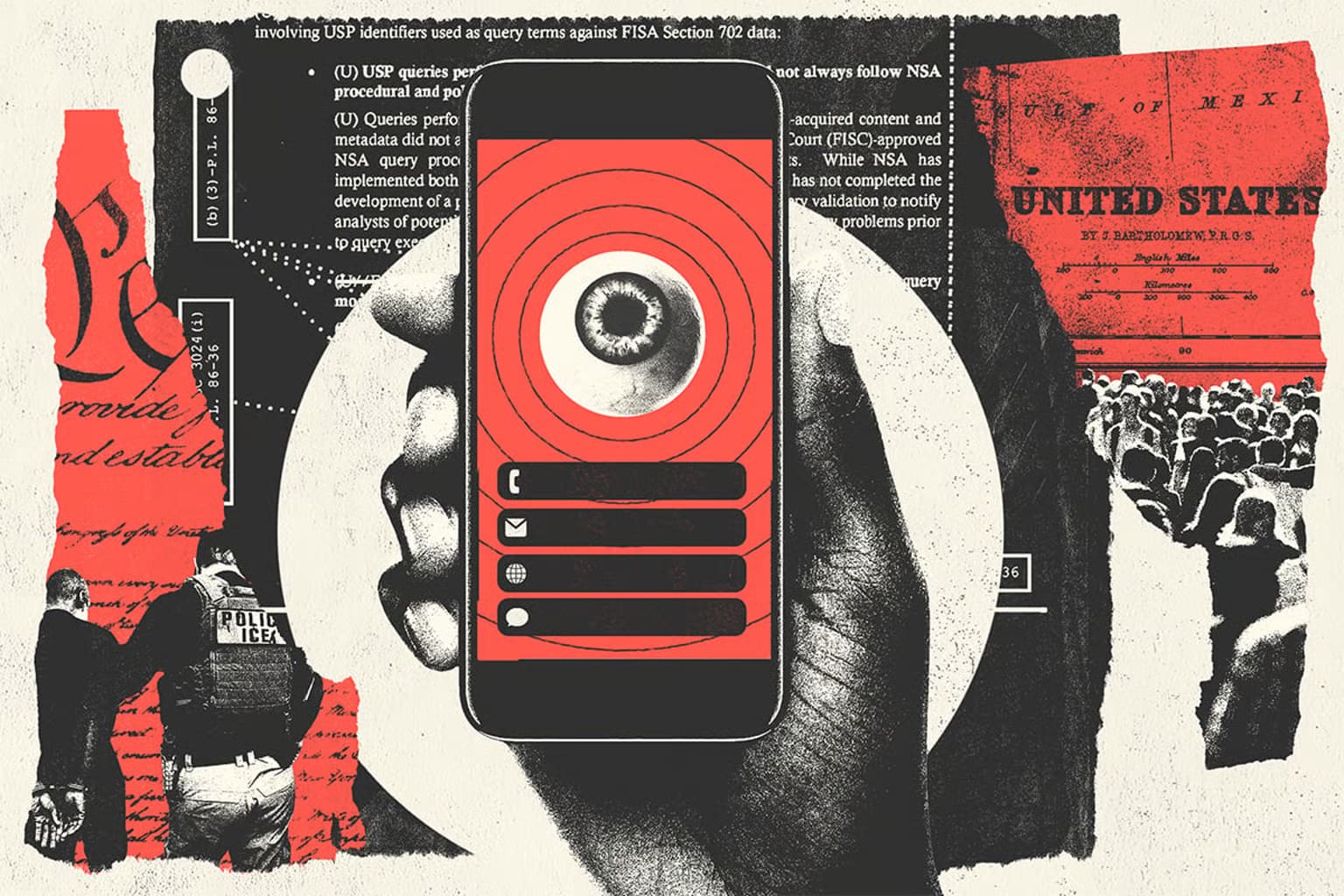
A declassified federal watchdog report reveals that the National Security Agency violated surveillance rules years after Edward Snowden’s 2013 disclosures, raising serious questions about the agency’s ability to protect Americans’ privacy rights under Section 702 of the Foreign Intelligence Surveillance Act.
The September 2021 inspector general report, obtained by POGO Investigates through a Freedom of Information Act lawsuit, documents ongoing rule violations and the absence of systems designed to prevent unauthorized searches of Americans’ electronic communications. These findings contradict official assurances that internal reforms implemented after Snowden’s revelations would eliminate surveillance abuses.
Persistent System Failures
The NSA Office of Inspector General found that more than half a decade after promising comprehensive oversight reforms, the agency still lacked a functioning system to prevent improper queries of “United States person identifiers” in sensitive intelligence data. Without such protections, the report warns, the agency faces increased risk of “violating civil liberties and individual privacy rights” of Americans.
The watchdog examined queries conducted between January 19, 2019, and March 19, 2019, identifying multiple instances where NSA analysts violated established procedures. In one case, an analyst discovered their own noncompliance after weeks of conducting daily queries that had never received approval from the agency’s general counsel. Another violation was caught by a post-query review auditor who found an analyst searching data outside the timeframe authorized by legal counsel.
These violations occurred despite NSA pledges to implement robust internal controls following the Snowden disclosures. The report’s findings suggest that procedural safeguards meant to protect Americans’ privacy remain inadequate nearly a decade after the surveillance programs first came under intense scrutiny.
Escalating Compliance Problems
Rather than improving, NSA compliance appears to be deteriorating. The most recent publicly available data covering June 2022 through November 2022 shows that improper queries increased by 7.7 percent compared to the previous reporting period. This upward trend occurred after the inspector general had already issued internal warnings about systemic failures.
The report notes that “as the amount of content and metadata queries performed by NSA analysts increases, so does the Agency’s risk of analysts performing unauthorized queries.” Metadata includes information about electronic communications such as timestamps, sender and recipient details, and other digital fingerprints that can reveal patterns of communication and association.
The inspector general made 13 recommendations to address these deficiencies, though the specific details remain classified. The NSA has since closed these recommendations, suggesting the agency believes it has addressed the identified problems, but no public verification of these fixes exists.
Section 702 Under Scrutiny
Section 702 authorizes the NSA to target electronic communications of non-U.S. persons abroad when there is reasonable belief they possess foreign intelligence information. The program operates through U.S.-based electronic communications service providers, inevitably capturing Americans’ communications with targeted foreign individuals.
Intelligence officials describe Section 702 as the “crown jewel” of America’s surveillance authorities, contributing to up to 60 percent of the President’s Daily Brief in 2023. The NSA, FBI, CIA, and National Counterterrorism Center can all search through this collected data, conducting what critics call “backdoor searches” of Americans’ communications without warrants.
The program faces reauthorization by April 20, with lawmakers divided over whether to extend it with or without reforms. President Donald Trump has reportedly told Republican members of Congress he wants the law extended unchanged, with support from Deputy Chief of Staff Stephen Miller.
Expanding Surveillance Scope
Congress explicitly authorized new uses for Section 702 data during the last reauthorization in 2024, permitting surveillance “for the vetting of all non-United States persons who are being processed for travel to the United States.” This provision removes the previous requirement that targets be believed to possess foreign intelligence information, potentially expanding surveillance to any foreign national seeking to enter the country.
Representative Joaquin Castro expressed concern that this expansion could serve as “an important tool to pursue their agenda” for those who “capitalize on fear and xenophobia.” The NSA confirmed in February 2024 that it uses 702 data for counterterrorism vetting of non-U.S. persons seeking U.S. travel.
Multi-Agency Abuse Patterns
While the NSA report focuses on one agency’s violations, surveillance abuses span multiple intelligence organizations. The FBI has drawn particular criticism for conducting nearly 5 million searches using U.S. person identifiers between 2019 and 2022, with little justification provided to oversight boards for most queries.
Recent FBI violations included searches involving a U.S. senator, state lawmakers, a state judge, and Black Lives Matter protesters. The Justice Department’s inspector general reported improvements in FBI compliance, stating the bureau “is no longer engaging in the widespread noncompliant querying of U.S. persons that was pervasive just a few years ago.”
However, as FBI searches decreased, other agencies increased their surveillance activities. The NSA, CIA, and National Counterterrorism Center more than doubled their approved U.S. person query terms from 3,755 in 2023 to 7,845 in 2024. Due to reporting delays, the compliance rate for these expanded searches remains unknown.
Personal Abuse Cases
Beyond institutional failures, individual analysts have abused surveillance powers for personal purposes. After the inspector general report was completed, two NSA analysts were found conducting surveillance on people they met through online dating services. In another case, two analysts searched for information on a non-U.S. citizen considering renting property the analysts owned.
Former U.S. Attorney Brett Tolman characterized these incidents as evidence that Section 702 serves as “the government’s permission slip for warrantless spying on Americans.” He testified that such activities represent “domestic spying” rather than legitimate national security intelligence gathering.
Court Criticism and Oversight Failures
The Foreign Intelligence Surveillance Court, which oversees government surveillance programs, has repeatedly criticized the NSA for “institutional ‘lack of candor’” regarding compliance violations. A 2017 court decision faulted the agency for failing to disclose queries that violated prohibitions on searching for U.S. citizens’ information in certain types of 702 data.
Despite these judicial rebukes, oversight mechanisms continue to rely primarily on self-reporting by intelligence agencies. The Privacy and Civil Liberties Oversight Board found “relatively” few NSA compliance violations in a 2023 review, noting that most violations are discovered internally. However, critics argue this self-policing approach provides insufficient protection for civil liberties.
Reform Proposals and Resistance
Senator Dick Durbin and Senator Mike Lee have introduced bipartisan legislation requiring warrants before agencies can access Americans’ communications content collected under Section 702. Their bill would maintain the program’s counterterrorism capabilities while adding constitutional protections for U.S. persons.
“Section 702 is a valuable tool to help keep our nation safe,” Durbin stated. “However, it’s being used to conduct thousands of warrantless searches of Americans’ private communications. That’s unacceptable.”
Reform advocates emphasize that continuing violations should give lawmakers pause before reauthorizing expansive surveillance powers. Elizabeth Goitein of the Brennan Center for Justice warned that “warrantless access to Americans’ private communications is an invitation to governmental overreach and abuse under any administration.”
Agency Non-Response
Both the NSA and its Office of Inspector General declined to respond to questions about the declassified report’s findings. This silence continues a pattern of limited public accountability for surveillance programs that operate largely in secret, with oversight conducted behind closed doors by courts and congressional committees with classified clearances.
The lack of transparency makes it difficult for the public and their representatives to assess whether promised reforms actually protect constitutional rights or merely provide political cover for continued surveillance expansion.
Constitutional Questions
The ongoing violations raise fundamental questions about whether intelligence agencies can effectively police themselves when conducting surveillance that affects Americans’ constitutional rights. The pattern of repeated violations, incomplete reforms, and expanding authorities suggests that current oversight mechanisms may be structurally inadequate.
As Congress considers Section 702 reauthorization, the declassified report provides concrete evidence that intelligence agencies continue violating rules designed to protect Americans’ privacy. Whether lawmakers will demand meaningful reforms or accept assurances of improved compliance remains an open question with significant implications for constitutional rights in the digital age.
The debate ultimately centers on whether Americans can trust intelligence agencies to respect legal boundaries when conducting surveillance that inevitably captures their communications, or whether constitutional protections require more robust oversight and warrant requirements for accessing U.S. persons’ data collected through foreign intelligence programs.
Resources:
https://www.pogo.org/investigates/declassified-report-reveals-nsa-broke-surveillance-rules
https://docs.house.gov/meetings/JU/JU00/20251211/118740/HHRG-119-JU00-Wstate-TolmanB-20251211.pdf
https://www.lawfaremedia.org/article/it-s-time-to-renew-section-702-of-fisa-permanently
https://oig.justice.gov/sites/default/files/reports/26-002_0.pdf
© 2026 – MK3 Law Group
For republication or citation, please credit this article with link attribution to MarginOfTheLaw.com.
What do you think?