
Constitutional Analysis • Civic Education • Investigative Research
Tag: Freedom
-
Whenever we examine law, and whatever the law is we are examining, it must be compared to the Constitution of these united States of America. Any statute, ordinance, regulation, order, commandment, directive, or guideline throughout the entire land of this country whether local, State, Federal, or even those the U.N. would demand we enforce, must be…
-

If you live in the United States of America, you live in a giant prison where liberty and freedom are slowly being strangled to death. In this country, the control freaks that run things are obsessed with watching, tracking, monitoring and recording virtually everything that we do. Nothing is private anymore. Everything that you do…
-

Totalitarianism does not announce itself. It builds. It uses familiar language, trusted institutions, and widely shared fears to establish control incrementally. By the time it becomes recognizable, significant ground has already been ceded. That is the pattern Arendt documented. That is the pattern worth examining now. The Polish lawyer and Member of the European Parliament…
-

our information footprint is enormous. But the government’s appetite for collecting it is larger. Federal, state, and local agencies now track the who, what, when, where, and how of your private life with tools that did not exist twenty years ago and with legal authority that is vague by design. Most of it happens without…
-

Mass surveillance sits at the center of a growing debate about individual agency, freedom, and self-governance. The question is not simply whether data is being collected. It is who collects it, under what rules, and with what consequences for the people being watched. Over the past two decades, a specific critique has taken shape under…
-

By Malcolm Lee Kitchen III | Margin Of The Law What if the majority had simply said no? Not with violence. Not with anger or hatred. But with quiet, unwavering conviction. Imagine waking up one morning and millions of people did not go to work. The roads are empty. The trains are quiet. The offices…
-

Mind Control, why and how transhumanism is forced upon you By Malcolm Lee Kitchen III | Margin Of The Law Introduction It may seem unbelievable to you, but you are a cyborg today. Not the metaphor of a half human, half robot individual, but a cyborg today in reality. Conscious or unconscious, willingly or not,…
-

For some of us, David E. Martin’s role in this operation was clear the moment he sat down with Mikki Willis for an interview. If you understand that the COVID-19 story is a psychological operation, then David’s bioweapon claims look like a red herring from the start. If you don’t yet see COVID-19 that way,…
-

The Fourth Amendment to the United States Constitution emerged from direct experience with government overreach. The founders had lived under British rule, where agents of the Crown searched homes without cause, intercepted correspondence, and tracked movements through colonial towns. That experience produced one of the most direct constitutional protections in American history: the right of…
-

The federal government has a boundary problem. Not a policy problem. Not a leadership problem. A boundary problem. The Constitution sets the limits. The federal government ignores them. And most Americans have been conditioned to accept that as normal. It is not normal. The Constitution is not a flexible document. It is not a mood…
-

By Malcolm Lee Kitchen III | Margin Of The Law Every day, politicians, news anchors, and textbooks describe America as a democracy. They say it so often and so confidently that most people never think to question it. You should question it. Because the word they are using is wrong, and the difference is not…
-
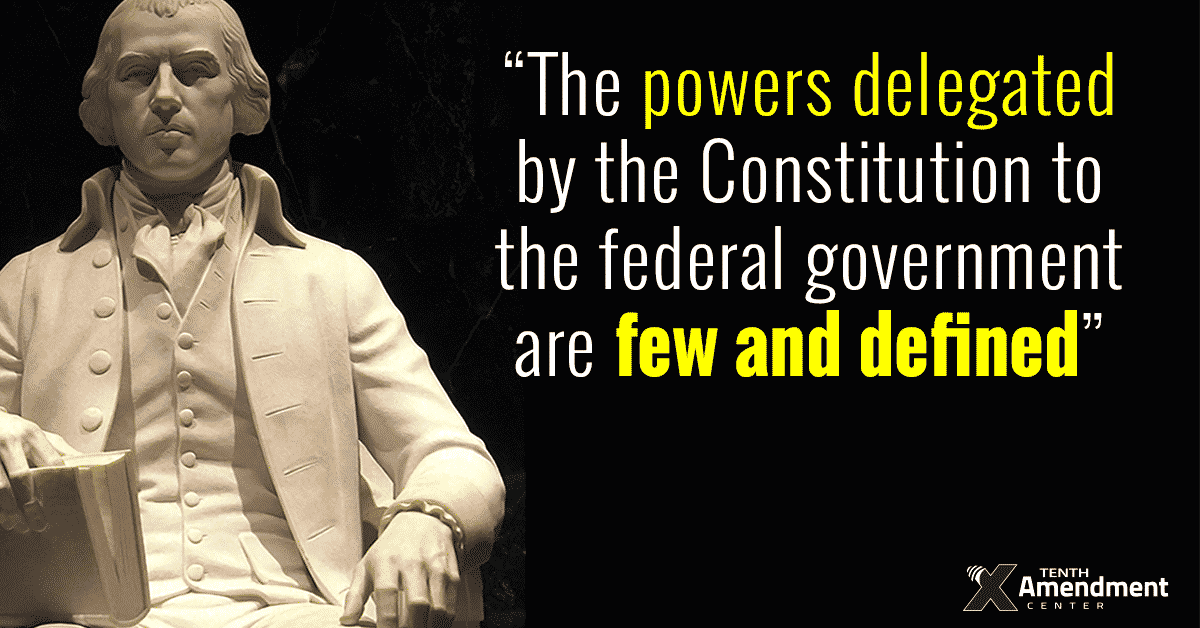
The Declaration of Independence does not open with a theory. It opens with a statement of purpose. Government exists to protect the rights of “life, liberty, and the pursuit of happiness.” That is the contract. When government fails at that job, or actively works against it, the contract has already been broken by the other…
-

Legitimate government does not arise from force, tradition, or divine appointment. It arises from the consent of the governed. That principle sits at the center of the American founding, embedded in the Declaration of Independence, structured into the Constitution, and tested repeatedly across more than two centuries of political life. Understanding what consent means, how…
-

American law is frequently presented as an orderly and self-correcting system. Civics textbooks describe a government restrained by constitutional boundaries, guided by elected representatives, and checked by institutional friction. Courts are portrayed as neutral arbiters. Agencies are framed as technical experts. Legislatures are described as the exclusive source of binding legal authority. That presentation is…
-

There is a dangerous misconception at the center of modern American governance. Most citizens are taught that government itself is the sovereign. That officials possess authority because institutions exist. That agencies, courts, departments, commissions, and executive offices naturally inherit power through existence alone. That is not how the American system was designed.
-

By Malcolm Lee Kitchen III | MK3 Law Group(c) 2026 – All rights reserved. You’re Already Inside the System Most people treat law as something they encounter only during a crisis. A lawsuit. An arrest. A contract dispute. Until then, it exists somewhere in the background, managed by professionals, relevant to other people’s problems. That…
-

By Malcolm Lee Kitchen III | MK3 Law Group(c) 2026 – All rights reserved. Rights Without a Path Are Just Words Everyone talks about rights. Constitutional rights, civil rights, statutory rights. Politicians invoke them. Activists demand them. Courts interpret them. The language of rights dominates public discourse about justice in America. Almost nobody talks about…
-

Color of law describes the condition under which a person uses authority granted by a government position to do something they are not legally permitted to do. The “color” in the phrase means the appearance of legitimacy, not the substance of it. An official acting under color of law looks like they are operating within…
-

How a Single Word Became the Most Effective Political Weapon in Modern America By Malcolm Lee Kitchen III | MK3 Law Group(c) 2026 – All rights reserved. Every political conversation in America carries a hidden assumption. It sits underneath the debates about policy, underneath the arguments about candidates, underneath the noise of every election cycle.…
-
By Malcolm Lee Kitchen III | MK3 Law Group(c) 2026 – All rights reserved. The Constitutional Foundation of the Right to Travel The right to travel freely is not a privilege granted by government. It is a fundamental right that predates the Constitution itself, recognized across centuries of American jurisprudence and embedded in the legal…