
Constitutional Analysis • Civic Education • Investigative Research
Author: MK3
-

A private company now scans 20 billion license plates every month, feeds that data to over 5,000 law enforcement agencies across 49 states, and is quietly expanding into microphones, drones, and AI profiling. Here is what that means for every American who drives a car.
-

The Fourth Amendment to the United States Constitution emerged from direct experience with government overreach. The founders had lived under British rule, where agents of the Crown searched homes without cause, intercepted correspondence, and tracked movements through colonial towns. That experience produced one of the most direct constitutional protections in American history: the right of…
-

This report documents human experimentation conducted or approved by agencies of the United States government, from the earliest recorded cases in the 1830s through 2026. It is organized into two sections. The first section covers experiments that were unambiguously unethical because subjects had no meaningful opportunity to consent, were deceived about the nature of what…
-
The official story is simple. Lyme disease emerged naturally in the northeastern United States during the early 1970s. A bacteria called Borrelia burgdorferi had existed in North American tick populations for millennia. Changing land use patterns, deer population growth, and expanding suburban development pushed infected ticks into contact with humans. The disease was identified, named,…
-

By Malcolm Lee Kitchen III | Margin Of The Law A data broker has spent years selling raw location data on individual Americans to federal, state, and local law enforcement agencies. The Electronic Frontier Foundation confirmed this after filing more than 100 public records requests across several months. The company is called Fog Data Science.…
-

Walmart operates one of the most sophisticated surveillance infrastructures in American retail. What shoppers encounter is not simply closed-circuit television monitoring aisles for theft. The network is an AI-integrated data fusion system that combines computer vision, behavioral analytics, loyalty program information, and wireless device tracking into a unified surveillance apparatus.
-

Most Americans have heard the phrase “the rule of law” so many times it has stopped meaning anything. It gets invoked in political speeches, written in newspaper editorials, and recited in civics classrooms as though repetition were enough to make its meaning clear. It is not. If you do not understand what American law is,…
-

The federal government has a boundary problem. Not a policy problem. Not a leadership problem. A boundary problem. The Constitution sets the limits. The federal government ignores them. And most Americans have been conditioned to accept that as normal. It is not normal. The Constitution is not a flexible document. It is not a mood…
-

By Malcolm Lee Kitchen III | Margin Of The Law Every day, politicians, news anchors, and textbooks describe America as a democracy. They say it so often and so confidently that most people never think to question it. You should question it. Because the word they are using is wrong, and the difference is not…
-
BMW CHARGED YOU TO USE YOUR OWN SEAT. GM SOLD YOUR DATA. THE FEDERAL GOVERNMENT IS PUTTING CAMERAS IN YOUR NEXT CAR. None of this is speculation. The records are public. The investigations are published. The legislation is signed. Here is what happened and what it means for anyone who owns or buys a car.
-

The American Constitutional Republic was founded on a specific premise: government answers to the people. Rights are not granted by the state; they are held by the individual and protected from the state. What has been built over the past two decades inverts that premise. The state now holds the information, the infrastructure, and the…
-

By Malcolm Lee Kitchen III | Margin Of The Law The American Constitution was built to limit government, not empower it. Its purpose is not to grant you freedoms. It restrains the government from infringing on freedoms you already possess as a human being. That is not theory. That is the core legal and historical…
-
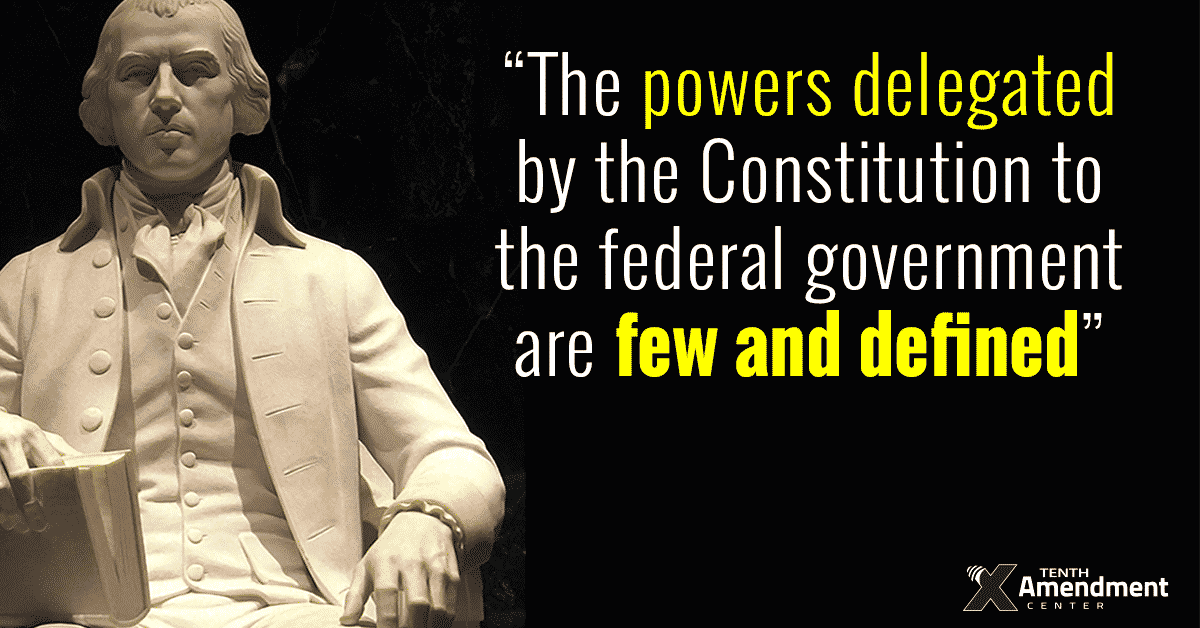
The Declaration of Independence does not open with a theory. It opens with a statement of purpose. Government exists to protect the rights of “life, liberty, and the pursuit of happiness.” That is the contract. When government fails at that job, or actively works against it, the contract has already been broken by the other…
-

Legitimate government does not arise from force, tradition, or divine appointment. It arises from the consent of the governed. That principle sits at the center of the American founding, embedded in the Declaration of Independence, structured into the Constitution, and tested repeatedly across more than two centuries of political life. Understanding what consent means, how…
-

Legal language is not a stylistic habit. It is operational infrastructure for allocating power, organizing risk, and settling meaning under conditions of conflict. Legalese evolved from overlapping linguistic traditions: Latin, Law French, Norman and Middle English. Courtroom incentives, evidentiary burdens, and the institutional demand for repeatable, enforceable results shaped every layer of it. The result…
-

The United States was built on a foundational commitment to limited government, individual liberty, and free-market competition. These principles did not emerge by accident. They were deliberate, hard-won, and codified through centuries of political thought, revolution, and constitutional design. Yet something has shifted inside the institutions responsible for transmitting those principles to the next generation.
-

By Malcolm Lee Kitchen III | Margin Of The Law You were taught that police states exist somewhere else. In textbooks, they live in the Soviet Union, East Germany, Maoist China. The Berlin Wall. The Gulag. The Stasi’s files on one in three East German citizens. You were not taught that the United States built…
-

American law is frequently presented as an orderly and self-correcting system. Civics textbooks describe a government restrained by constitutional boundaries, guided by elected representatives, and checked by institutional friction. Courts are portrayed as neutral arbiters. Agencies are framed as technical experts. Legislatures are described as the exclusive source of binding legal authority. That presentation is…
-

There is a dangerous misconception at the center of modern American governance. Most citizens are taught that government itself is the sovereign. That officials possess authority because institutions exist. That agencies, courts, departments, commissions, and executive offices naturally inherit power through existence alone. That is not how the American system was designed.
-

By Malcolm Lee Kitchen III | MK3 Law Group(c) 2026 – All rights reserved. You’re Already Inside the System Most people treat law as something they encounter only during a crisis. A lawsuit. An arrest. A contract dispute. Until then, it exists somewhere in the background, managed by professionals, relevant to other people’s problems. That…