
Constitutional Analysis • Civic Education • Investigative Research
Tag: Law
-
The government refuses to secure your data By Malcolm Lee Kitchen III | MK3 Law Group(c) 2026 – All rights reserved. The Only Transparent Window Into a Closed Industry California’s mandatory data broker registry is the clearest public signal available that some brokers are actively selling or sharing American personal data to actors outside the…
-
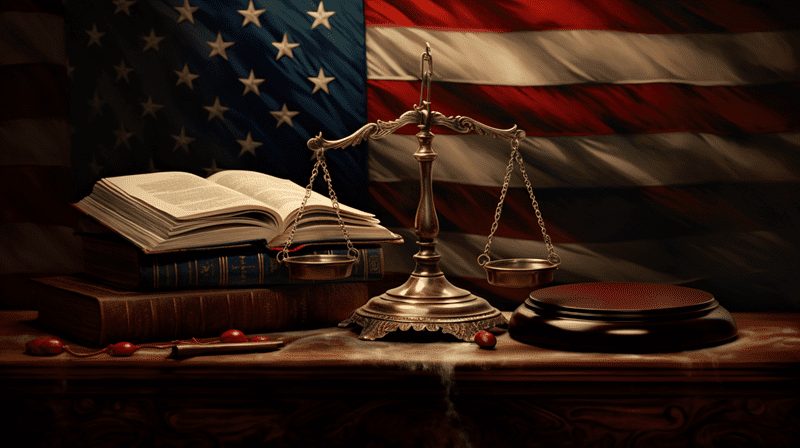
Most people treat the Constitution as a government document. They think of it as something Washington produced, something courts interpret, something officials swear to uphold. That framing is understandable. It is also wrong. The Constitution is not a product of government. Government is a product of the Constitution. And the Constitution itself is a product…
-

Understanding case law is essential to understanding how law actually works. A statute may state something in plain terms, but cases fill in what those terms mean when they collide with real-world facts. Case law answers the questions that statutes leave open, resolves conflicts between competing rules, and sometimes creates rights and obligations that no…
-

Understanding American government is not about memorizing dates, clauses, or the names attached to them. It is about recognizing structure. How power is created. How it is constrained. Where the individual stands in relation to it. Most people encounter the system in fragments. A right here. A court ruling there. A clause pulled out of…
-

By Malcolm Lee Kitchen III | Margin Of The Law(c) 2026 – All rights reserved. The Oath and What It Means Every sworn defender of the Republic remembers the moment they raised their right hand and spoke those words: “to support and defend the Constitution of the United States against all enemies, foreign and domestic.”…
-
The Myth of Legislative Exclusivity By Malcolm Lee Kitchen III | MK3 Law Group(c) 2026 – All rights reserved. Most Americans learned a clean version of government in school. Congress writes the laws. The President enforces them. The courts interpret them. That model is tidy, easy to teach, and fundamentally incomplete. What actually governs daily…
-
By Malcolm Lee Kitchen III | MK3 Law Group(c) 2026 – All rights reserved. A declassified federal watchdog report reveals that the National Security Agency violated surveillance rules years after Edward Snowden’s 2013 disclosures, raising serious questions about the agency’s ability to protect Americans’ privacy rights under Section 702 of the Foreign Intelligence Surveillance Act.…
-
Part 1 and Part 2 Combined By Malcolm Lee Kitchen III | MK3 Law Group(c) 2026 – All rights reserved. Introduction The United States did not build a surveillance state. It built a surveillance economy. That distinction matters. A state-run surveillance apparatus can, at least in theory, be dismantled through legislation, litigation, or political will.…
-

Discover the core of American freedom with our civic education platform, offering deep constitutional law insights and clear explanations for government structure learning. A constitution is more than a document; it is the ultimate expression of a nation’s commitment to liberty, establishing a framework that limits government power and protects individual freedoms. This platform serves…
-
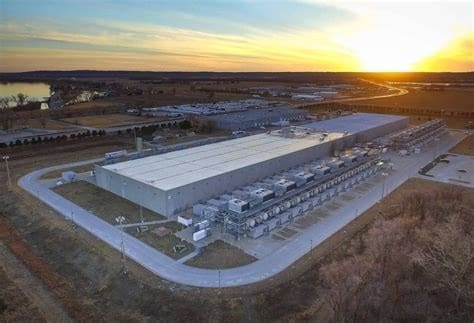
Data centers are the physical foundation of modern surveillance. They provide the storage capacity and computing power required to convert human activity, movement, financial transactions, private communications, biometric records, into machine-readable data at a scale the state can actually use. Without this infrastructure, the current scope of government oversight would be technically impossible to sustain.…
-

Administrative rules, also called regulations, are legally binding requirements issued by government agencies. They are not statutes. Legislatures do not write them. They are not court decisions. Judges do not produce them. Agencies produce them, and agencies operate within the executive branch of government, not the legislative or judicial branch.
-

The administrative state is the most significant structural shift in American governance since the founding of the Constitutional Republic. It is not a conspiracy. It is not hidden. It operates in plain sight, through regulatory frameworks, agency rulemaking, and procedural systems that most citizens never encounter until those systems are aimed at them. The result…